Baccarat Online – Play Baccarat at Online Casinos
Baccarat has long been seen as one of the most straightforward casino card games. It is quick to learn, runs at a fast pace, and keeps the goal simple. Online play makes it even more accessible because there is no need to wait for a seat or memorize complex hand rankings. In the standard version, every bet revolves around three main outcomes: Player wins, Banker wins, or a Tie. The shoe is commonly made up of 6 or 8 decks, and the winning hand is decided by the final digit of the total, which always lands from 0 to 9.
Online casinos also give baccarat a flexible home. Players can choose digital tables with low minimums or join live dealer rooms streamed in real time. The rhythm stays snappy, the rules stay consistent, and the baccarat payouts are clearly defined, which is why baccarat is often picked by those who prefer predictable conditions over constant decision-making.
If you are interested in learning more about the game, its rules, house edge, and other aspects, you are on the right page. The guide below will cover all core aspects of baccarat and will allow you to start playing with a lot more confidence.






What Is Baccarat and How Does It Work?

The Baccarat card game is built around fixed rules, which means the pace stays quick and the player makes very few decisions mid-round. You place a bet first, then the dealer deals two hands called Player and Banker. Those labels are not real people at the table. They are simply the two sides you can bet on.
The goal is to predict which hand finishes closest to 9. Scoring uses a modulo-10 total, so only the last digit matters. A simple example is 7 + 8 = 15, which counts as 5. Most rounds start with two cards dealt to each hand. If either hand has a natural 8 or 9, the round ends immediately. Otherwise, a third card may be drawn, but it is not a choice you make. It follows set drawing rules that apply the same way every time. That automated flow is why baccarat casino games are popular online. Once the bet is placed, the round resolves fast, with clear outcomes and no complicated hand rankings to track.
Types of Baccarat Games
Online casinos usually offer three main real money baccarat formats. The most common is Punto Banco, where all drawing is automatic and the only decision is which bet to place. Chemin de Fer is closer to a player-driven table style, since the banker role can rotate and drawing decisions are not always automatic. Baccarat Banque is similar to Chemin de Fer, but the banker position is held for multiple rounds, which changes the rhythm of play and how the table flows. Below, you’ll learn more about these varieties.

Punto Banco
Punto Banco is the default casino baccarat format in online platforms, including most live dealer tables. It works well online because the flow is standardized. Players do not decide when to draw. The dealing sequence is fixed by the rules. Before the cards are dealt, the only core choice is the bet: Player, Banker, or Tie. The dealer then deals two cards to each side from a shoe, most commonly using 6 or 8 decks.
Scoring is based on the last digit of the total, so every hand ends from 0 to 9. If either side starts with an 8 or 9, the round ends immediately as a natural. If not, a third card may be drawn, but it happens automatically under the drawing table. That consistency is a big reason Punto Banco dominates online lobbies. Rounds move fast, outcomes are easy to verify, and the game stays predictable in a way that suits both quick-play RNG tables and streamed live rooms.
Chemin de Fer
Chemin de Fer is often seen as the more traditional European style of baccarat, historically linked to French casinos and private clubs. Compared with Punto Banco, it feels more interactive because the banker role can rotate among players. Instead of betting on fixed table sides, players typically wager against the current banker.
The biggest difference is how drawing decisions can work. In many Chemin de Fer rulesets, the Player side may have limited discretion (most notably on a total of 5) on whether to draw a third card, rather than relying entirely on an automatic drawing table. The banker may also choose whether to draw after seeing the Player’s decision (and any third card, if drawn). That extra involvement gives the game a different character. It can feel more strategic and social than Punto Banco, even though the house fees still eat away at RTP.
In online casinos, Chemin de Fer is rare. There are occasionally tables titled “Chemin de Fer”, but most of them still automate some or all decisions for speed and consistency, so the practical experience turns out to be closer to Punto Banco than the traditional version.
Baccarat Banque
Baccarat Banque is closely related to Chemin de Fer, but it puts more stability into the banker role. In this format, the banker, whose role is traditionally played by a fellow player, holds the position for a run of rounds instead of just one, which changes the table rhythm and makes the flow feel more structured. Classic rules commonly use three decks, and players bet against the banker, who effectively “banks” the game for that stretch. Some traditional Baccarat Banque layouts also involve two Player hands (not just one), which is one reason the variant can look and feel different from standard Punto Banco tables.
The objective is still the same as other variants. You are betting on which side finishes closest to 9 using the last digit of the hand total. The difference is in the dynamic it creates. When the banker does not rotate every round, players find it easier to focus on streaks and momentum, especially in longer sessions. Even though past results have no impact on the future ones, it is still a notable change in the atmosphere.
When it comes to online baccarat, some casinos do include Baccarat Banque as a variation, but they are exceedingly few and far between.

Online Baccarat vs Land-Based Baccarat
The biggest difference between online baccarat and a land-based table comes down to access and pace. Online games run 24/7, and a round can start in seconds, especially at RNG tables where dealing and scoring are instant. In a physical casino, the same round often takes longer due to seating, chip handling, and the natural rhythm of a busy table.
Online play also tends to offer more choice in table conditions. Many gambling sites list multiple limits side by side, including low minimum tables, plus faster modes for shorter sessions. Live baccarat is the closest match to a casino floor, using real dealers and physical shoes, most commonly with 6 or 8 decks. The digital layout adds practical tools as well, like round history, clear bet prompts, and rule reminders that reduce mistakes.
A land-based table wins on atmosphere and social energy, but etiquette and table speed are shared with everyone playing. Banker commission and the standard payouts are typically similar online, but the specifics depend on the table terms. What changes most often is what each venue offers, such as table limits, available variants, and optional side bets.
Baccarat Rules Explained
Casino online baccarat revolves around three betting outcomes: Player win, Banker win, or a Tie. The dealer deals two cards to each side, and the score uses the last digit of the total, so every result runs from 0 to 9. If an 8 or 9 appears right away, the round ends. If not, a third card may be drawn under fixed rules. There is no decision to hit or stand, so once the bet is placed, the round plays out automatically.
Baccarat Card Values
Baccarat uses a different scoring system than most card games because there are no hand rankings. Only the point total matters, and it is easy to calculate. Cards from 2 through 9 are worth their face value. An Ace is always worth 1. Tens, Jacks, Queens, and Kings are worth 0. Because of that, a hand that looks “strong” in other games can add very little to the total in baccarat.
After adding the cards, only the last digit counts. If the total reaches double digits, drop the first digit and keep the remainder. For example, 8 + 7 = 15, which becomes 5. Another example is Ace (1) + King (0) + 9 = 10, which becomes 0. This scoring is a big reason baccarat plays fast online and stays easy to follow. Remember the core values, then always reduce the total to a single digit from 0 to 9.
How a Baccarat Round Is Played
A baccarat round starts with choosing a table and placing a bet. The player decides in advance which outcome to back: Player, Banker, or Tie. Once the bet has been confirmed, the dealer deals cards to both hands, two cards to each side. Online, that can mean an RNG table with instant dealing or a live table where cards are drawn from a physical shoe, most often using 6 or 8 decks.
Next, the totals are calculated using the last-digit scoring system. If Player or Banker has an 8 or 9 right away, the round ends as a natural and the bet is settled. If there is no natural, the third-card rules come into play. The key point is that this is not a manual choice by the player. Drawing follows a fixed sequence, so the round plays out the same way wherever the standard rules are used.
After the final totals are confirmed, the result is declared as a Player win, Banker win, or Tie, payouts are applied, and the next round begins. Because each hand resolves quickly, baccarat is played in short streaks rather than long, drawn-out rounds.
Drawing Rules for Player and Banker
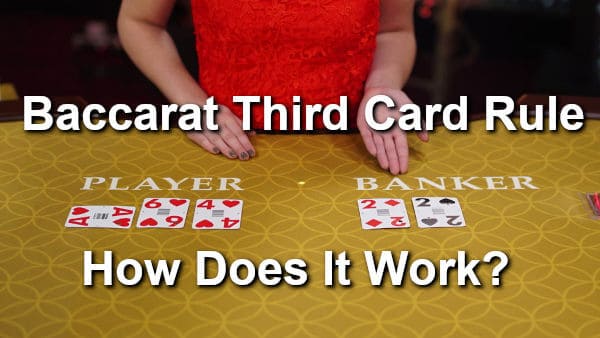
In baccarat, the third card is not a player choice. It follows a fixed sequence, which is why online tables feel consistent from round to round. The first check is for naturals. If either hand totals 8 or 9 with the first two cards, the round ends immediately. If there is no natural, drawing rules apply.
The key idea is simple. The Player hand uses a basic threshold. The Banker hand reacts to its own total and, when Player draws, to the value of Player’s third card. That is why the Banker side looks more complicated, but the table handles it automatically.
Quick drawing guide (standard rules):
1) Player rules (two-card total):
- 0–5: Player draws a third card
- 6–7: Player stands
- 8–9: Natural (round ends)
2) Banker rules if Player stands (Player total 6–7):
- 0–5: Banker draws a third card
- 6–7: Banker stands
- 8–9: Natural (round ends)
3) Banker rules if Player draws a third card:
- Banker total 0–2: Banker draws
- Banker total 3: Banker draws unless Player’s third card is 8
- Banker total 4: Banker draws if Player’s third card is 2–7
- Banker total 5: Banker draws if Player’s third card is 4–7
- Banker total 6: Banker draws if Player’s third card is 6–7
- Banker total 7: Banker stands
- Banker total 8–9: Natural (round ends)
Final totals are always reduced to the last digit (0–9), and the result is declared as a Player win, Banker win, or Tie.
Baccarat Betting Options
Most baccarat online tables start with three core bets. You can back the Player hand, the Banker hand, or a Tie. These options appear across almost every format, from fast RNG tables to live dealer rooms, because the entire game is built around these outcomes.
Each bet comes with its own math, including hit rate, payout structure, and possible commission. The Banker bet, for example, is commonly paired with a 5% commission on winnings. Betting on a draw brings higher winnings, but occurs much less frequently. Some online baccarat casinos also offer side bets, but these vary by table and have a higher house edge than the three main bets.
Player Bet
A Player bet backs the Player hand to win. If it hits, the payout is 1:1, meaning the profit is equal to the bet. If the round ends in a tie, the player’s bet ends in a tie and the bet is returned. Player wins slightly less often than Banker, but there is no commission, which keeps payouts easy to calculate.
Banker Bet
A Banker bet backs the Banker hand to win. It lands slightly more often than Player, making it the strongest core bet by hit rate. The payout is 1:1, but most tables charge a 5% commission on winnings, so net profit is a bit lower. If the round ends in a tie, the bet is usually considered a push, and the amount is returned.
Tie Bet
A Tie bet backs a round where Player and Banker finish with the same total. If you win, the payout is 8:1 or 9:1, depending on the table. If there is no tie, the bet loses in full. On many tables, a tie pushes Player and Banker bets back as a refund, while the Tie bet pays separately. Since ties are relatively rare, this bet usually has a higher house edge than the two main ones.
Baccarat Odds and Payouts
The key to baccarat odds and payouts is that outcomes do not land evenly, and that drives the value of each bet. In standard baccarat, Banker wins roughly 45.9% of hands, Player lands around 44.6%, and Ties show up close to 9.5% of the time. In practical terms, a tie is about a one-in-ten event, which explains why it is priced with a much bigger return while also bringing much higher volatility.
If you look only at hands that actually resolve as a win, with ties removed, Banker comes out ahead at about 50.7% of decided rounds. That is why many tables balance the Banker side through a commission or by tweaking payouts in no-commission variants. A quick check of the paytable on the exact table you are joining is worth it, since online baccarat casinos can keep the same scoring rules while adjusting commission details or tie pricing.
House Edge in Baccarat
Baccarat online casino games are known for a low house edge compared with many table games, but the number depends heavily on the bet you choose. Under standard rules, the house edge on a Banker bet is around 1.06% even after the commission is deducted, while the house edge on a Player bet is around 1.24%. The Tie bet is a different story. With the common 8:1 payout, its house edge is often around 14.36%, which is why it is usually treated as an occasional high-volatility option rather than a long-term main bet.
One detail to watch is table rules. In no-commission baccarat, the commission is removed, but the casino balances that by adjusting payouts, most commonly on Banker wins that total 6. So when picking a table, it helps to look beyond limits and format and confirm how commission and tie pricing are handled on that specific version.
Baccarat Strategy and Tips
Baccarat does not reward in-hand decision making like blackjack, since drawing is automated. Strategy is mostly about bet selection and session control. The most effective approach is to keep it simple and play within the math the table offers. If a casino lists multiple baccarat versions, it is worth checking the rules first, because no-commission formats can change the value of specific outcomes.
Practical tips that keep play baccarat online disciplined:
- Focus on the main bets, which are the Banker or the Player, and treat the draw as a high-risk, random option.
- Use flat stakes instead of increasing bets after losses to “win it back.”
- Set a clear stop-loss and a profit target for the session, then leave when you hit either one.
- Confirm how Banker commission is handled on that table, since 5% is common but not universal.
- Match limits and speed to your bankroll, fast tables punish mistakes more quickly.
- Read roadmaps as results history, not as prediction tools.
Best Baccarat Bets Explained
If you focus on the math, the choice comes down to two betting options. The banker wins slightly more often due to the draw rules, so at standard tables it’s the best online baccarat option in the long run, even with the commission. Player is close behind. It hits a bit less frequently, but there is no commission and payouts are easy to track. A tie is a high-paying bet, but it occurs rarely and has the highest house edge, making it more suitable for casual, risky bets. In no-commission versions, rule tweaks can shift that balance, so it helps to check the table terms before you bet.
Common Baccarat Mistakes to Avoid
Even with simple rules, baccarat gambling online often goes wrong because of choices outside the deal itself. The usual problems are not about drawing, since that is automatic. They come from bet sizing, pace, and expectations. The biggest losses often happen when players chase results or assume a streak must flip soon.
Mistakes that show up most often:
- Chasing losses by increasing stakes after bad rounds.
- Treating Banker or Player streaks as something that “has to” reverse.
- Making Tie a main bet because the payout looks attractive, then overplaying it.
- Ignoring table-specific terms like Banker commission or no-commission rule tweaks.
- Playing too fast without session limits, especially on quick mobile tables.
- Using roadmaps as prediction tools instead of simple result history.
Live Baccarat Explained
Live baccarat streams a real dealer and table, while bets are placed through an online casino interface. You watch the cards dealt in real time and choose Player, Banker, or Tie. Cards come from a physical shoe, most often 6 or 8 decks, with standard scoring and drawing rules. Compared to RNG tables, the pace of play is slower, but you get the atmosphere at the table, the interaction, and the more social aspect that many players prefer.
Baccarat Bonuses and Promotions

Online casinos do not promote baccarat constantly, but they do so periodically, and the value comes from the terms, not the headline percentage. The most common starting offer is a welcome bonus on the first deposit. In baccarat, this is more relevant in the form of bonus funds than free spins. Ongoing promos tend to include weekend reloads, weekly cashback, and live table leaderboards that reward volume or winning streaks.
The numbers matter. Many casinos set wagering requirements around 30x–50x on bonus funds, and table games often count at a reduced rate toward clearing. Baccarat typically contributes 10%–20% of your wagered amount. There is also a maximum bet limit, often around $5–$10, and an expiration date, usually between 7 and 30 days. A practical rule is to pick offers where baccarat clearly contributes to wagering, confirm the max bet limit before starting, and avoid casino bonuses that only look good on paper. With the right terms, a promo can extend a session and protect the bankroll. Without them, it mainly adds restrictions.
Other Casino Games Baccarat Players Often Enjoy
Players who enjoy baccarat often gravitate toward games with clear bet logic and quick rounds. Blackjack is a common next step because it still rewards bankroll control and basic math, while keeping the pace high. The difference is that blackjack involves more decisions, so it suits players who want a bit more influence over each hand.
Roulette is another frequent pick, especially the European version with a single zero. It stays simple on the surface, with options to play conservatively on outside bets or chase bigger returns on straight-up numbers. For those who like the live environment, casino game shows such as Lightning Roulette or Monopoly Live are also popular, mixing familiar wagering with more dynamic presentation.
If the goal is the fastest, most hands-off format, many players move to slots, although that is a different casino experience driven by volatility and higher swing. Overall, baccarat tends to pair well with games where the rules are easy to follow and results arrive quickly.
Free Baccarat vs Real Money Baccarat
Free baccarat is usually available in demo mode and serves two practical purposes. It lets players learn the interface and get used to the pace. Rules, scoring, and drawing logic typically match standard tables, so it is a low-pressure way to practice without risk. It is also useful for comparing formats, such as RNG versus live dealer, and choosing the speed and layout that feel most comfortable.
Real money baccarat changes the stakes, not the mechanics. That is where table limits, Banker commission, variant rules, and bonus terms start to matter. Discipline also becomes the deciding factor. Flat staking, a clear session stop-loss, and emotional control have a bigger impact than any “system.” Free play helps build the routine and reduce avoidable mistakes. Real money play then tests how well a player can stick to a plan instead of chasing losses.
FAQs
Why does the banker bet win more often in baccarat?
Banker has a small built-in advantage due to the third-card drawing rules. In standard baccarat, Banker wins about 45.9% of hands, Player about 44.6%, with the rest being ties.
Is it possible to lower the house edge when playing baccarat?
You cannot change the math of the deal, but you can choose lower-edge bets. In practice, that means sticking to Banker or Player. Tie and many side bets increase the house edge.
Why do casinos charge commission on banker bets?
The commission offsets Banker’s higher win rate. Without it, Banker would be too favorable for players. On standard tables, the fee helps keep the house edge around 1.06%.
Are baccarat roadmaps and patterns actually useful?
They are useful as a record of past outcomes, not as a prediction tool. Each round is treated as independent, so visible streaks can look meaningful without improving the odds of the next result.
What mistakes cause players to lose faster in baccarat?
Chasing losses, jumping stakes after bad runs, overplaying the Tie bet, ignoring table rules like commission, and playing without clear session limits are the most common.