








Mississippi Stud is an exciting casino poker variant where you don’t compete against other players, but aim to form the best five-card hand and win according to a fixed payout table. Unlike traditional poker games, there’s no dealer hand to beat. Instead, your strategy revolves around when to increase your bets as the community cards are revealed.
With simple rules yet meaningful decision points, Mississippi Stud combines luck and calculated risk in every round. In this guide, we’ll cover the betting structure, hand rankings, and helpful strategy tips to help you play confidently and maximize your winning potential.
Rules of the Game: Objective & Setup
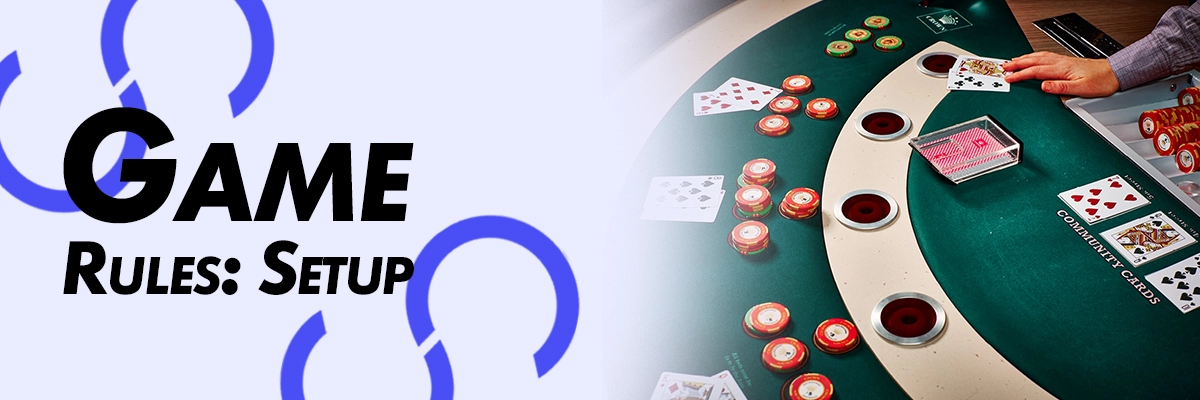
In Mississippi Stud, the objective is simple: make a strong five-card poker hand and get paid according to the game’s payout table. According to standard Mississippi Stud rules, you are not competing against the dealer or other players. Instead, you’re playing strictly against the paytable, which rewards specific poker hands starting at a pair of Jacks or better. Understanding the core rules of Mississippi Stud helps players recognize that qualification, not comparison, determines winnings.
Under official Mississippi Stud game rules, the game uses a standard 52-card deck. Each player makes an Ante bet to begin, receives two face-down cards, and then has opportunities to increase their wager as three community cards are revealed one at a time. After the final card is dealt, the five-card hand is evaluated and paid according to the posted payout table.
Beating the Paytable
Unlike traditional poker variants such as Texas Hold’em, the Mississippi Stud table game does not require you to beat a dealer hand. Instead, your goal is to “beat the paytable.” This means your final five-card hand must meet or exceed the minimum qualifying standard listed on the table layout. Each qualifying hand corresponds to fixed odds.
For example, two pair might pay 2:1, three of a kind 3:1, a straight 4:1, and premium hands like a flush, full house, or straight flush offer increasingly larger payouts. If your final hand does not qualify for a payout, you usually lose all bets placed during the round. However, a pair of 6s through 10s is a push, so those wagers are neither paid nor collected. Because payouts are fixed, understanding probabilities and making smart betting decisions at each stage significantly impacts your long-term results.
Hole Cards vs. Community Cards
Mississippi Stud combines private cards with shared community cards, similar to Texas Hold’em, but with important differences. At the start of each round, you receive two face-down hole cards that only you can see. These cards form the foundation of your final hand. After reviewing them, you decide whether to place an additional bet or fold. Three community cards are then revealed one at a time, with betting decisions made before each card is exposed.
These shared cards combine with your two hole cards to create the best possible five-card poker hand. Since the bet must be made before you see the next card, carefully evaluating potential combinations such as possible straights or flushes is essential to an effective strategy.




Ante Bet
The Ante bet is the mandatory starting wager in Mississippi Stud. Before any cards are dealt, each player places an Ante bet in the designated betting circle. This bet establishes your participation in the round and determines the size of your future wagering options. When you receive two hole cards, you can either fold and lose your Ante, or bet 1x, 2x, or 3x your original Ante.
Additional betting rounds follow as community cards are revealed. All wagers placed (Ante plus subsequent bets) are paid according to the final payout odds if your hand qualifies. Because every later bet is tied to the Ante amount, choosing an appropriate base wager for your bankroll is an important strategic decision.
Official Betting Rules
Mississippi Stud follows a structured, multi-round betting format that gives players three opportunities to increase their wager. The game begins with a mandatory Ante bet. After receiving two hole cards, you must decide whether to fold and surrender your Ante or make a 1x, 2x, or 3x bet equal to your original Ante. Once that decision is made, the dealer reveals the first of three community cards. Before each of the next two community cards is turned face up, you again choose to either fold (forfeiting all bets made so far) or place an additional wager of 1x, 2x, or 3x the Ante.
By the end of the hand, a player who never folds may have up to four bets on the table: the Ante plus three raise bets of 1x, 2x, or 3x the Ante. After the final community card is revealed, the five-card hand is evaluated and all wagers are paid according to the posted paytable if the hand qualifies.
Mississippi Stud Payout Table
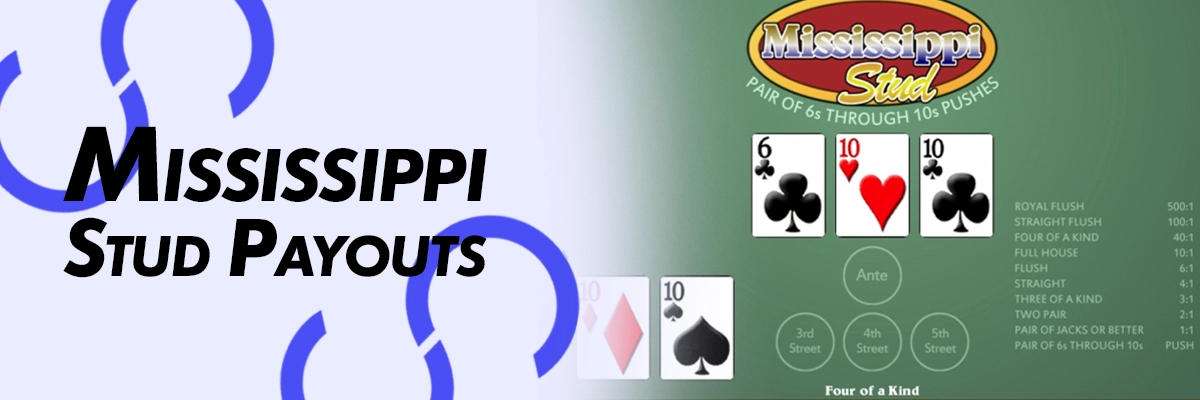
The Mississippi Stud payout table is one of the most important elements covered in any comprehensive Mississippi Stud guide, as it determines exactly how much you win based on your final five-card poker hand. Unlike many casino table games, there’s no dealer hand to beat. Instead, all bets, including antes and any raises, are paid at fixed odds if your hand meets the qualifying conditions used in standard online Mississippi Stud rules and in live casino play.
Most casinos pay starting at jacks or better, while medium pairs (6s through 10s) result in a push. Stronger hands earn progressively higher payouts, with a royal flush delivering the biggest reward.
| Hand Ranking | Payout |
|---|---|
| Royal Flush | 500 to 1 |
| Straight Flush | 100 to 1 |
| Four of a Kind | 40 to 1 |
| Full House | 10 to 1 |
| Flush | 6 to 1 |
| Straight | 4 to 1 |
| Three of a Kind | 3 to 1 |
| Two Pair | 2 to 1 |
| Jacks or Better | 1 to 1 |
| Pair of 6s to 10s | Push |
Optimal Strategy Chart
Mississippi Stud may seem simple, but using an optimal strategy significantly reduces the house edge. Because you must decide whether to raise or fold before seeing the next community card, every decision matters.
The stronger your current hand or the better your draw potential, the more aggressively you should bet (3x the ante). Weaker hands should be folded early to avoid accumulating losses. Below is a step-by-step description of the basic strategic principles most players follow to maximize long-term results.
2-Card Strategy (3rd Street)
Your first decision comes after receiving your two hole cards. This is the most important betting round because you have the most flexibility. The standard optimal 2-card play is to bet 3x with any pair; non-pair starts are generally 1x or fold, rather than making broad 3x raises with suited high cards or connected high cards.
Completely uncoordinated low cards, especially those of different suits and unrelated to each other, should be discarded. Folding weak hands early protects your bankroll, while making the maximum raise with premium hands can build larger payouts when you hit.
3-Card Strategy (4th Street)
The standard 3-card strategy doesn’t involve betting 3x on every pair. Low pairs and multiple draws are valued at 1x, while 3x is applied to medium pairs or better, as well as certain premium draws.
However, if you have three low, unrelated cards without the possibility of a flush or straight, the mathematically correct play is to fold. At this point, discipline becomes crucial to avoid chasing weak draws.
4-Card Strategy (5th Street)
The standard 4-card strategy calls for a 3x raise on any made hand with a pair of 6s or better, any four-card flush, and any four-card outside straight 8-high or better. Other straight draws are generally 1x rather than 3x.
Weak hands that have no realistic chance of making a hand, such as four low, unrelated cards, should be folded to prevent further losses. Since only one card remains, the draw odds are clearer, making this round less speculative. Disciplined play in the final round protects your overall expected value.
The Math: House Edge vs. Element of Risk
In Mississippi Stud, the house edge is 4.91% when using an optimal strategy. This percentage is calculated based on the ante. Since players can raise up to 3x on three different streets, the average total bet per hand is approximately 3.59 times the ante when played correctly.
A more important metric for players is the risk element, which measures expected loss relative to the total amount wagered. In Mississippi Stud, the risk element is approximately 1.37%, making it comparable to strong blackjack games using basic strategy.
However, volatility is high. Premium hands like a royal flush (500:1) occur only approximately 1 in 649,740 hands, while a qualifying pair (jacks or better) appears approximately 10.66% of the time. This leads to long periods of losses balanced by occasional large payouts, making bankroll management extremely important.
Conclusion
Mississippi Stud rewards players who are patient, understand the payout table, and make disciplined decisions about raising or folding on each street. While you can’t completely eliminate the house edge, you can manage your risk by folding weak starting hands early and exploiting your advantage with strong made hands and quality draws.
If you keep your ante size reasonable, follow a sound strategy, and remember that volatility is part of the game, Mississippi Stud becomes a fun and structured way to enjoy poker without having to deal with other players. In my opinion, the best “winning move” here is simple: respect the math, avoid chasing hopeless hands, and only make big bets when the cards truly warrant it.
FAQs
What Happens If I Tie With The Dealer In Mississippi Stud?
There is no dealer hand in Mississippi Stud, so a tie isn’t possible. You’re playing strictly against the paytable, not the house’s cards. If your final five-card hand is Jacks or Better or stronger, you’re paid according to the posted odds. If it is a pair of 6s through 10s, the hand pushes and your wagers are returned. If it is lower than that, you lose your wagers.
Can I Bet 1x, 2x, Or 3x In Mississippi Stud?
Yes. On each betting round after the Ante, you may choose to bet 1x, 2x, or 3x your original Ante. The decision must be made before the next community card is revealed. If you fold instead, you forfeit all wagers placed up to that point.
What Is The “Bar” Hand In Mississippi Stud?
A “bar” hand is the minimum hand of cards that neither wins nor loses. In most casinos, a “bar” hand is defined as anything from a pair of sixes to a pair of tens. Hands lower than a “bar” hand, such as low pairs or high cards, are considered worthless and result in the loss of all bets.
Is Card Counting Possible In Mississippi Stud?
Card counting is technically possible but not practical. Since players compete against a paytable rather than a dealer hand, tracking cards provides minimal advantage. The game’s structure and frequent reshuffling significantly limit any meaningful edge from traditional counting methods.