





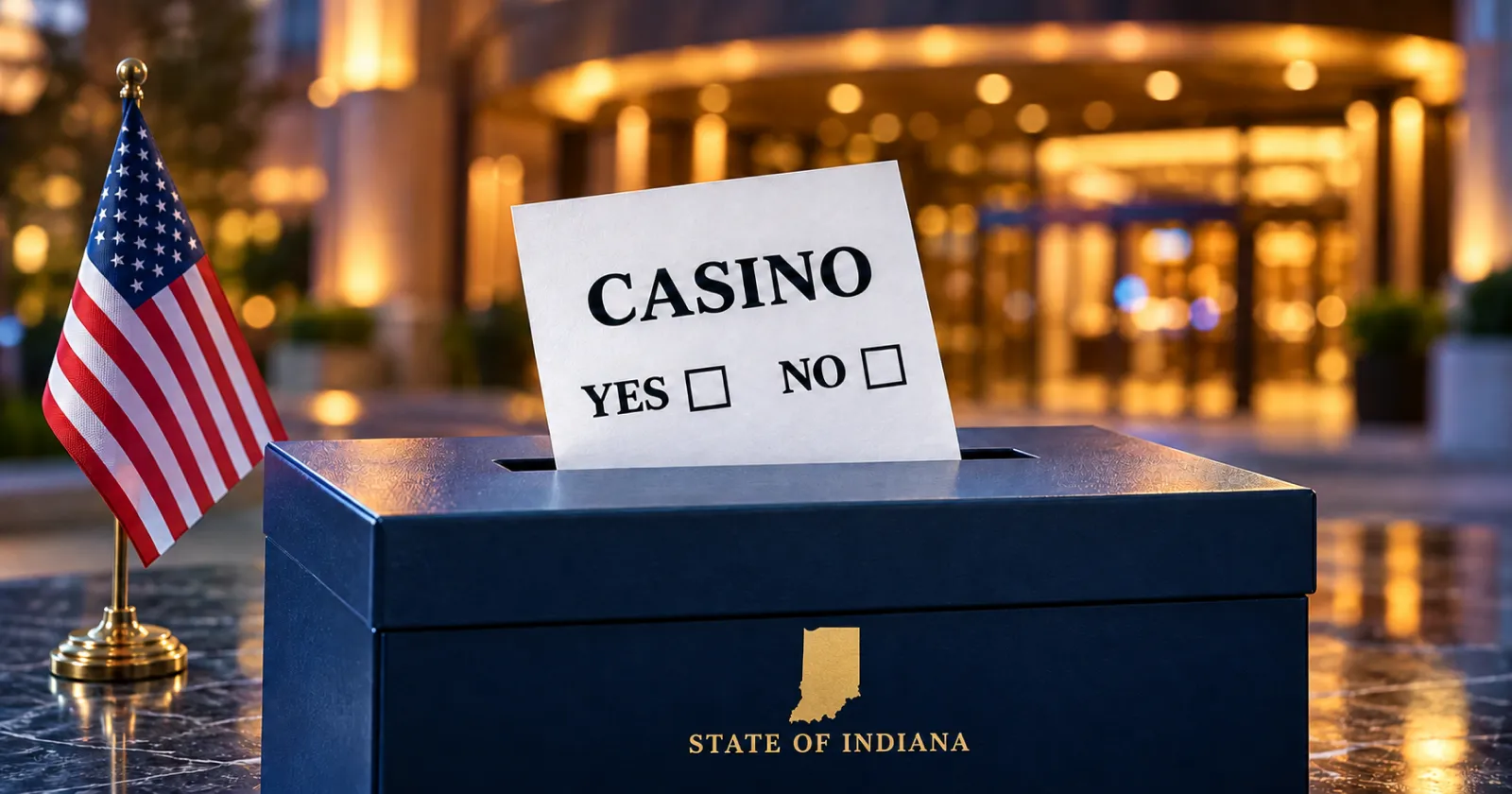

US Representative Marlin Stutzman has urged voters in three northeastern Indiana counties to reject upcoming casino referendums. Residents of Allen, DeKalb and Steuben counties will vote on 3 November on whether their counties should be eligible to host Indiana’s proposed 14th casino.
Stutzman Raises Concerns about Gambling Harm
Stutzman, a Republican representing all three counties, argues that a new casino would make gambling more accessible and increase pressure on public services associated with gambling addiction. He also raised concerns about the social impact of casino development.
The congressman has backed legislators who opposed the proposal. However, supporters argue that a casino could create jobs and generate additional economic activity for the region.
What the Legislation Would Allow
House Enrolled Act 1038, signed by Governor Mike Braun on 4 March 2026, allows the Indiana Gaming Commission to award one new casino licence in a county that approves the referendum.
A positive vote would not automatically determine the casino’s location or guarantee a licence. Operators would need to apply, secure the required local government support and commit at least $500 million to development. Applications are due by 1 December 2026, with the commission expected to make its decision by 15 April 2027.
The selected operator would also have to pay a $150 million fee, distributed between the state general fund and a new fund intended to support communities affected by casino closures.
A negative vote would have a more permanent consequence: the county could not hold another referendum on the issue under the legislation.
Disagreement over Economic Benefits
State fiscal analysts estimate that the proposed casino could generate between $170 million and $230 million annually in adjusted gross receipts. The state’s general fund could receive $30 million to $40 million a year, while local governments could receive a net $16 million to $20 million.
Casino supporters have cited a separate study projecting more than 2,000 permanent jobs and over $100 million in annual new revenue. Opponents, meanwhile, argue that voters are being asked to approve casino gambling without knowing where the property would be built.
The state’s estimates also account for potential revenue losses at existing gambling venues, including the Anderson racino and the South Bend tribal casino.
The referendum results will determine which counties remain eligible to host the casino. Even if voters approve the proposal, the project will still depend on operator interest, investment commitments and the Indiana Gaming Commission’s decision.








Comments
This action can't be undone.