








Looking to improve your Pot Limit Omaha results in 2026? This guide breaks down the best Omaha starting hands and explains how smart pre-flop decisions shape long-term success. You will learn how to evaluate PLO starting hands, identify premium combinations, avoid common traps, and use practical hand charts to make better decisions before the flop in modern games.
What Are Starting Hands in Omaha Poker?
In Pot Limit Omaha, a player receives four hole cards instead of two. These four cards make up an Omaha starting hand, and this 4-hole card structure creates a much more complex and dynamic environment than Texas Hold’em. Because there are more possible combinations, hand selection becomes a critical skill for navigating pre-flop decisions.
The way Omaha starting hands work is defined by coordination and “nut” potential. Unlike other variants, you cannot judge a hand by a single high card or an isolated pair; instead, a hand’s value depends on how all four cards interact to create powerful draws and redraws.
Using Exactly Two Cards Rule
A key Omaha rule that many beginners struggle with is that players must use two private cards and exactly three community cards to make a final hand. They can never use just one card from their hand, and they cannot play the board in the same way they sometimes can in Hold’em.
This rule changes hand values dramatically. Even if the board looks perfect, the outcome depends on whether two of their four hole cards actually complete the best possible hand. For example, holding one ace does not automatically give a player the nut flush if the correct second card is not also part of the final combination.




What Makes a Strong Omaha Starting Hand
Strong Omaha poker hands are defined by balance, coordination, and nut potential rather than one standout feature. The best starting hands in Omaha usually combine connected cards, suit value, high-card strength, and several ways to improve profitably after the flop.
That kind of structure gives a hand more stability, more flexibility, and better long-term playability.
- Connected Cards (Run-Down Hands): These are some of the best starting Omaha hands because cards close in rank, like J-T-9-8, create powerful wraps and straight draws. This coordination increases your equity and board coverage, making connected hands far more playable than those with large gaps.
- Suited and Double-Suited Hands: Many of the best PLO starting hands are double-suited, offering two separate ways to flop strong flushes. This added flexibility is most valuable when the suits work alongside high pairs or connected cards to provide nut potential rather than marginal draws.
- High Pairs and Set Potential: Premium pairs like A-A and K-K are featured in the PLO best starting hands because they offer raw strength and the chance to flop top sets. However, their value is significantly higher when side cards add connectivity or suits, allowing for better post-flop development in multi-way pots.
- Nut Potential vs. Weak Draws: The Omaha best starting hands are those that can make the nuts, such as top flushes or the highest possible straights. Drawing to the top of the range helps players avoid expensive mistakes with medium-strength holdings when the action gets heavy.
Best Omaha Starting Hands Ranked
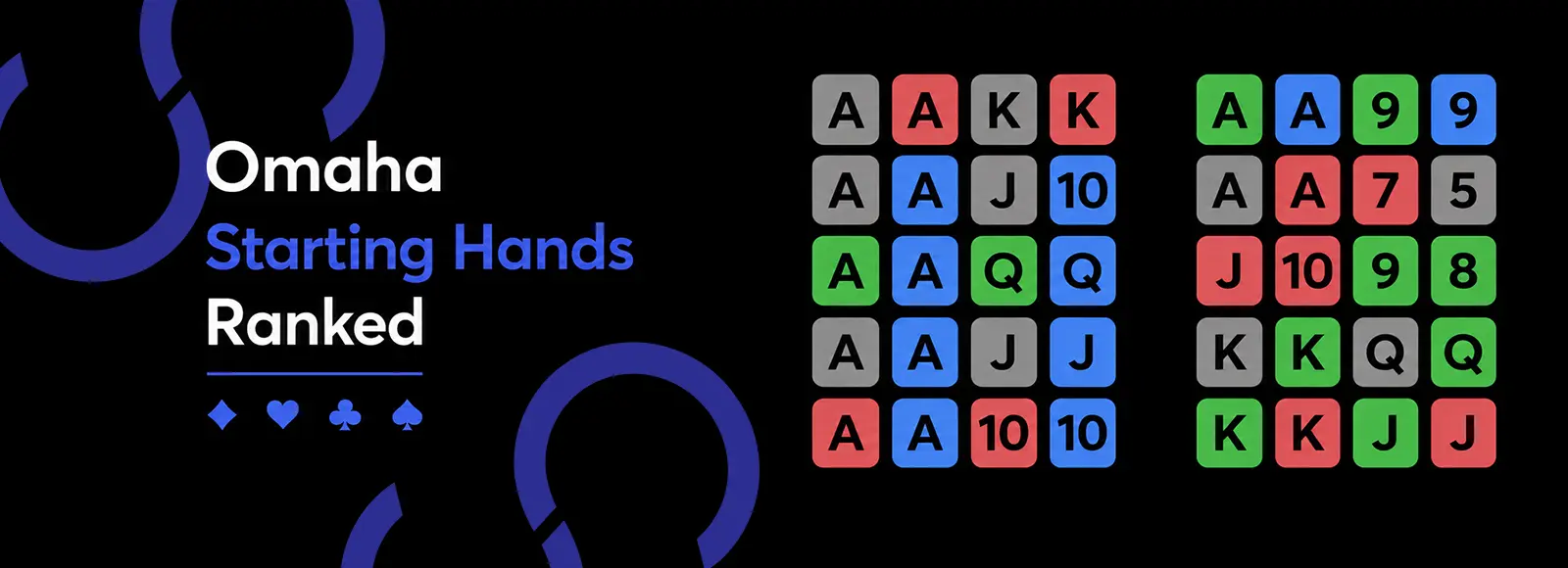
Ranking starting hands in Omaha is less about memorising a rigid chart and more about recognising which structures deliver the best long-term value. The strongest Omaha poker starting hands usually combine high-card strength, connected cards, suit value, and reliable nut potential. To keep things practical, it helps to sort hands into clear tiers based on overall quality and playability.
- Premium hands: elite holdings worth playing aggressively.
- Strong hands: profitable hands with slight structural weaknesses.
- Playable hands: situational hands best used selectively.
Premium Hands
Premium Omaha hands are the strongest holdings you can be dealt, combining elite features like high pairs, connected side cards, and double-suited potential, such as A-A-K-K or K-Q-J-T double-suited. Their value lies in both raw pre-flop equity and the diverse post-flop routes they create, allowing you to flop top sets, nut flush draws, and powerful wraps with redraws.
Strong Hands
Strong hands sit just below the premium tier, offering high playability and profit through solid double-suited structures or high-card combos like K-K-Q-J single-suited. The key difference is consistency; these hands usually have one minor flaw—like a single suit or a small gap—that keeps them out of the “elite” category.
Playable Hands
Playable hands offer profit but require high selectivity and table awareness, as they lack the all-around strength of premium tiers. Usually consisting of medium rundowns or weak single-suited combos, these hands perform best in late position where you can see a cheap flop. Because they lack nut potential and struggle out of position, they should be treated as flexible tactical options rather than automatic plays.
Starting Hands to Avoid
Knowing which games to play at an online casino is just as important as knowing which hands deserve action.. In Omaha, many weak holdings look acceptable at first glance, especially to players coming from Hold’em, but they often lead to dominated draws and expensive second-best hands.
The most dangerous starting hands usually lack coordination, suit quality, or nut potential. The next sections focus on two common problem categories that regularly trap beginners and cost money over time.
Uncoordinated Rainbow Hands
Uncoordinated rainbow hands are among the weakest starting holdings in Omaha because they offer very few ways to make strong, reliable combinations. These hands contain cards that do not work well together in rank and also lack suited support, which means they rarely flop powerful draws or nut-heavy boards.
A hand such as A-Q-7-2 rainbow may look respectable because it contains high cards, but in practice it often produces weak top pairs, poor two-pair combinations, or vulnerable draws. That is a bad foundation in a game where players regularly continue with wraps, sets, and strong flush draws.
Weak Aces and Small Pairs
Weak aces and small pairs cause trouble because they look stronger than they really are. A hand such as A-A-7-2 rainbow may appear premium to a Hold’em player, yet without useful side cards, suit support, or connected structure, it can become awkward very quickly after the flop.
Small pairs have similar problems. While they can flop a set, they usually lack the backup needed to continue confidently when the board becomes dangerous. In Omaha, lower sets are more vulnerable than many beginners expect, especially in multi-way pots where straights, flushes, and bigger redraws are common.
Omaha Starting Hands Chart
A starting hand chart makes pre-flop decisions simpler by grouping Omaha hands into practical categories. Instead of judging every hand from scratch, players can use a chart to see which holdings are worth raising, which are playable in position, and which should usually be folded. It is a useful shortcut for developing a more disciplined hand-selection approach.
| Hand Category | Example Hands | Best Use | Main Strength | Main Risk |
|---|---|---|---|---|
| Premium | A-A-K-K double-suited, A-A-J-T double-suited, K-Q-J-T double-suited | Raise and build the pot | Excellent nut potential, strong redraws | Can still lose value without position |
| Strong | A-A-Q-9 single-suited, K-K-Q-J single-suited, J-T-9-8 single-suited | Open in most positions, continue selectively | Good equity and solid board coverage | Less reliable than premium hands |
| Playable | 10-9-8-7 single-suited, Q-J-10-8 single-suited, 9-8-7-6 single-suited | Best played in middle or late position | Can flop strong draws and wraps | Often difficult to realise out of position |
| Mostly Fold | A-Q-7-2 rainbow, K-8-5-5 rainbow, J-6-3-2 rainbow | Usually fold pre-flop | Very limited value | Weak coordination and poor nut potential |
How Position Affects Hand Selection
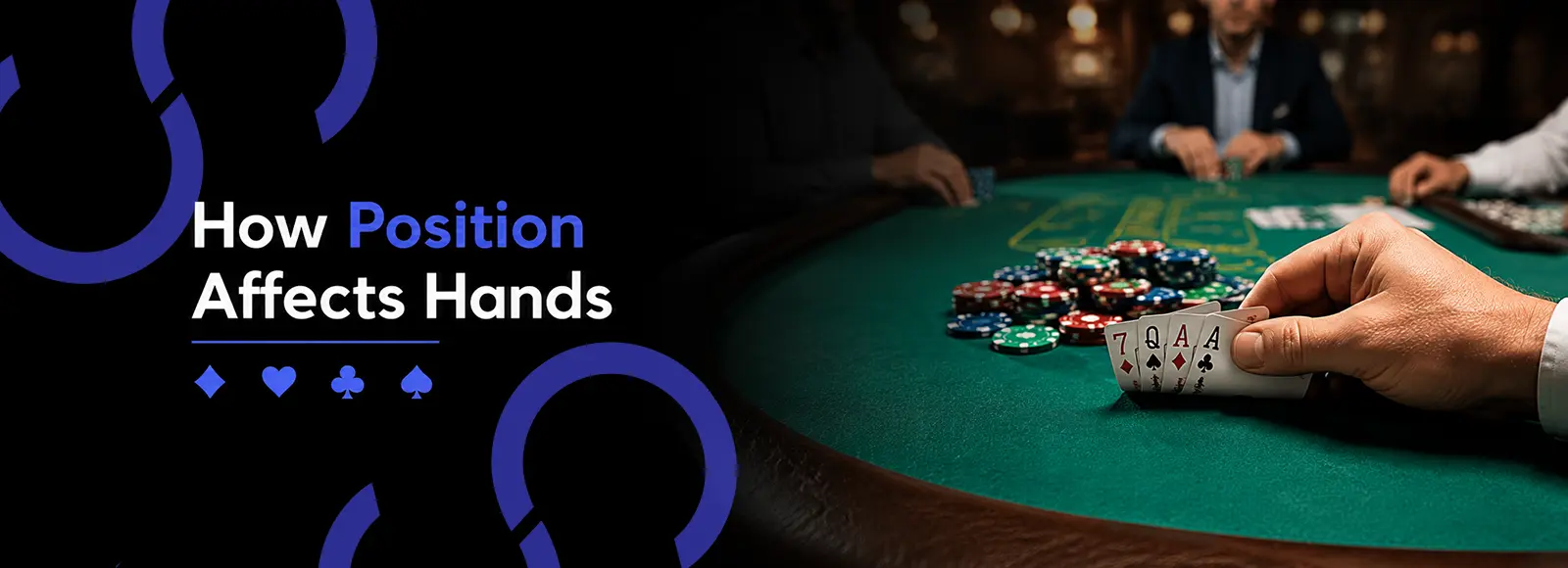
Position has a major influence on which Omaha hands should be played before the flop. The later you act, the more information you gain about the strength and intentions of other players, which makes hand selection more flexible and profitable. By contrast, early positions require a tighter range because there is a greater risk of facing raises, difficult post-flop decisions, and reduced control over the size of the pot.
Early Position Strategy
Success in early position hinges on extreme selectivity and prioritizing “nut” potential over speculative playability. Since you will often be forced to act first on all subsequent streets, your range must be robust enough to withstand pressure from opponents behind you.
- What to play: Premium double-suited pairs (e.g., A-A-J-T), high Broadway rundowns (K-Q-J-T), and strong double-suited connectors (J-T-9-8).
- What to avoid: Small pocket pairs (4-4-5-6) and hands with “danglers”—cards that do not connect with the rest of the hand (A-K-Q-2). These combinations are dangerous because they often flop medium-strength hands that are easily dominated in multi-way pots, leading to expensive second-best finishes.
- Strategy tip: Range Protection. Your primary goal is to enter the pot with a range strong enough to comfortably continue even against an aggressive 3-bet, effectively mitigating the tactical disadvantage of playing out of position.
Middle Position Adjustments
In middle position, the grip loosens just enough to let you play some “fun” hands without it being a statistical suicide mission. You’re essentially transitioning from a fortress mentality to a more opportunistic approach, looking for ways to exploit the shrinking number of players behind you.
- What to play: Focus on medium-to-high connected rundowns like J-10-9-8 or 9-8-7-6 (double-suited preferred), and suited Aces with Broadway backup such as A-K-Q-10. You can also start opening medium pocket pairs that have sidecard connectivity, like J-J-10-9.
- What to avoid: Stay away from “danglers”—hands with three coordinated cards and one completely unrelated low card, such as K-Q-J-3. These are dangerous because they lack the “wrap” potential needed to navigate multi-way pots, often leaving you with a marginal hand that is easily dominated by the button’s range.
- Strategy tip: Range Expansion. Your main objective is to widen your opening range to capitalize on the folded early positions while maintaining enough “nut” potential to withstand a 3-bet from the late positions or blinds. You aren’t just looking for the nuts anymore; you’re looking for hands that can comfortably realize their equity on a variety of flop textures.
Late Position Opportunities
Late position is the seat of maximum opportunity, where the information advantage allows you to play a much wider and more creative range of hands. It transforms speculative holdings into profitable tools by giving you the final word on the size of the pot and the pace of the action.
- What to play: Broaden your range to include medium-to-low rundowns like 8-7-6-5 or 6-5-4-3, and gapped connectors such as J-9-8-7. You can also play speculative hands like single-suited Kings (K-J-9-7) or small pocket pairs with backup connectivity, such as 5-5-6-7.
- What to avoid: Avoid “dry” or disconnected hands that have zero nut potential, such as Q-7-4-2 rainbow or A-9-5-2. These combinations are dangerous because even with position, they rarely flop enough equity to withstand a lead from the blinds, often forcing you to fold and waste the positional advantage.
- Strategy tip: Positional Pressure. Your primary goal is to “attack the blinds” and maximize equity realization. Use your position to take away pots when opponents check to you, and use your ability to see the final action to keep pots small with marginal hands or build massive pots when you have the nuts.
Omaha Starting Hands Strategy: Tips and Common Mistakes of Beginners
Mastering Omaha requires moving beyond the “two-card” mentality of Hold’em. Because every player has four cards, the gap between a premium hand and a marginal one is slim, making disciplined pre-flop selection the foundation of a winning strategy.
Why You Shouldn’t Overvalue Aces in Pot Limit Omaha
Pocket Aces are the most misplayed hands in PLO. While they are a statistical favorite pre-flop, their value post-flop depends entirely on their sidecars and suits.
- Premium Aces: Hands like A-A-K-Q are powerhouse holdings because they can flop sets, nut flushes, and broadway straights.
- “Naked” Aces: Disconnected, unsuited Aces (e.g., A-A-9-4) are dangerous. They often leave you with a vulnerable one-pair hand that is easily crushed by wraps or flushes in multi-way pots.
Focus on Nut Hands & Avoid Weak Draws
In Omaha, you are looking for the nuts, not just “a hand.” Chasing non-nut draws—like a Queen-high flush or the low end of a straight—is a recipe for financial disaster. Because opponents hold four cards, someone almost always has the higher version of your draw.
Prioritize hands that offer nut potential and redraws. If you flop the nut straight but have a flush draw to go with it, you can play aggressively; if you’re drawing to a second-best hand, you are likely “drawing dead” against a competent opponent’s range.
Choose Coordinated Starting Hands Over Marginal Holdings
Coordination is king. A strong Omaha hand is one where all four cards work together to create multiple possibilities.
- Avoid “Danglers”: A hand like K-Q-J-3 is weakened significantly by the “3,” which contributes nothing to the hand’s structure.
- Positional Discipline: Play tighter in early positions. Opening marginal or disconnected hands from the front of the table forces you to play “guess-work” poker out of position, where you’ll often be forced to fold away your equity.
Impact of Stack Size and Multi-Way Pots on Hand Selection
Your pre-flop decisions must adapt to the “effective” stack sizes and the number of players in the pot.
- Deep Stacks: Favor implied odds hands, such as double-suited rundowns (9-8-7-6). These allow for complex post-flop play and the ability to win massive pots when you hit a wrap or flush.
- Short Stacks: Focus on raw equity and high pairs. When stacks are shallow, your goal is to realize your equity quickly, making high-card strength more valuable than speculative connectivity.
- Multi-Way Pots: Look for hands that “retain equity.” High pairs with suited connectivity perform well when three or more players see the flop, as they can withstand heavy action and multi-street pressure.
Omaha vs Texas Hold’em: Strategic Shifts
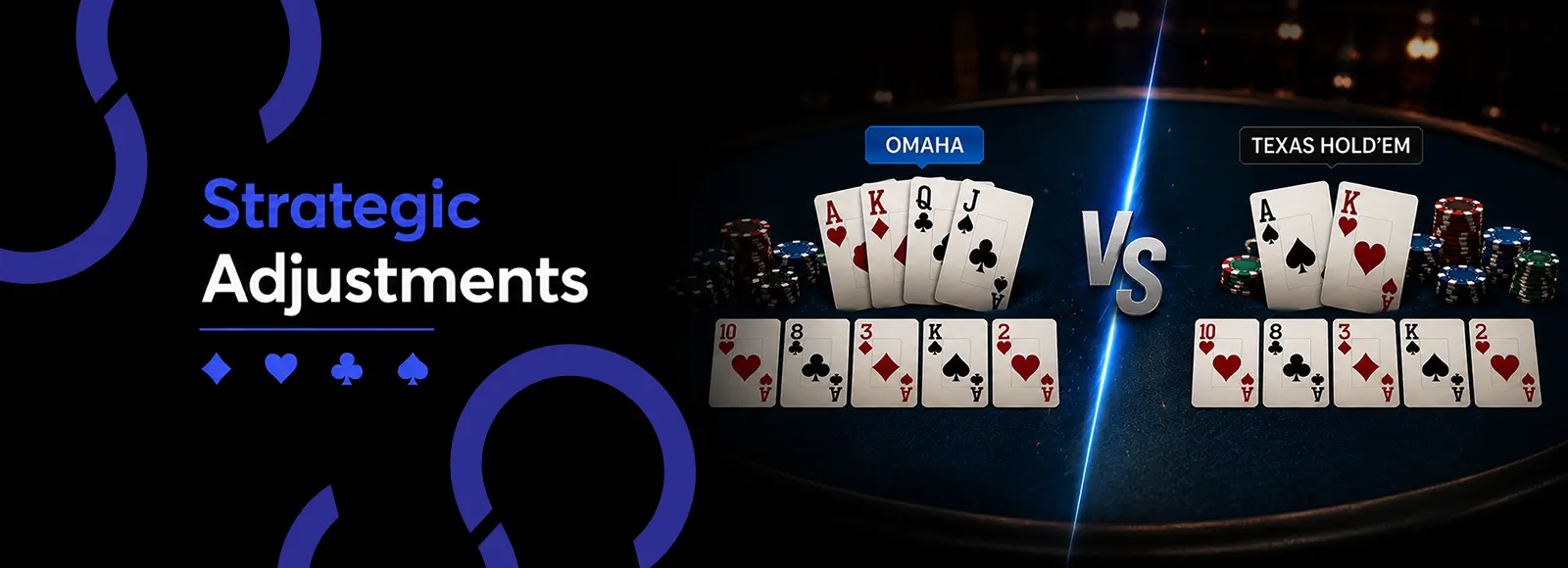
Although Omaha and Texas Hold’em share the same basic poker structure, the strategic approach is very different. Omaha deals four private cards instead of two, which creates more combinations, stronger draws, and more frequent post-flop action. As a result, hand selection, nut potential, and positional awareness become even more important. Players moving from Hold’em to Omaha must adjust quickly because hands that look strong in one format may be far less reliable in the other.
| Strategic Element | Omaha | Texas Hold’em | Main Strategic Shift |
|---|---|---|---|
| Private cards | 4 hole cards | 2 hole cards | Omaha creates more combinations and more complex hand selection |
| Hand construction | Must use exactly 2 hole cards | Can use any combination of hole and board cards | Omaha requires more precise reading of made hands and draws |
| Hand strength frequency | Big draws and strong made hands appear often | Strong hands appear less frequently | Omaha players must respect heavy action more often |
| Starting hand value | Based on coordination, suits, and nut potential | Often driven by raw pair strength or high cards | Omaha rewards connected, well-structured hands more heavily |
| Nut importance | Very high | Important, but less extreme | In Omaha, second-best hands lose more money |
| Typical post-flop play | More multi-way pots and redraw battles | More one-pair and top-pair situations | Omaha demands stronger value thresholds |
| Betting structure | Commonly played as Pot Limit | Commonly played as No Limit | Omaha limits bet sizing but increases complexity through equity interaction |
Summary: Your Blueprint for Pre-Flop Mastery
Winning pre-flop in Omaha comes down to choosing hands with real structure and purpose. The strongest holdings give you several ways to continue confidently, whether through premium made hands, powerful draws, or strong equity on a wide range of flops. That is why hand quality matters far more than simply entering more pots.
A solid pre-flop approach also depends on context. The same hand can rise or fall in value depending on seat, stack depth, and how likely the pot is to become multi-way. Players who account for those factors make cleaner decisions and avoid many of the costly spots that trap less disciplined opponents.
FAQs
What is the best starting hand in Omaha?
A-A-K-K double-suited is widely regarded as one of the strongest starting hands in Omaha. It combines premium pair strength, top-set potential, strong nut-flush value, and excellent post-flop playability. Hands such as A-A-J-T double-suited are also elite, so the exact “best” hand can depend on context and playing style.
Why are double-suited hands better than single-suited in Omaha?
Double-suited hands are better because they give you two separate flush possibilities instead of one. That increases flexibility, improves overall equity, and creates more ways to continue profitably after the flop. In Omaha, extra nut-flush potential is a major strategic advantage.
Are pocket aces always strong in Omaha?
No, pocket aces are not always strong in Omaha. Their value depends heavily on the side cards, suits, position, and stack depth. Bare aces without coordination or suit support can become difficult to play, especially in multi-way pots against strong drawing hands.
What hands should beginners avoid in Omaha?
Beginners should usually avoid uncoordinated rainbow hands, weak aces with poor side cards, and small pairs without support. These hands often make second-best combinations and create awkward post-flop decisions. In Omaha, weak structure usually leads to weak long-term results.
How many starting hands should you play in Omaha?
There is no single perfect number because it depends on position, table dynamics, and stack depth. In general, you should play fewer hands than instinct suggests, especially from early position. A selective, disciplined range is far more profitable than loose pre-flop action.