






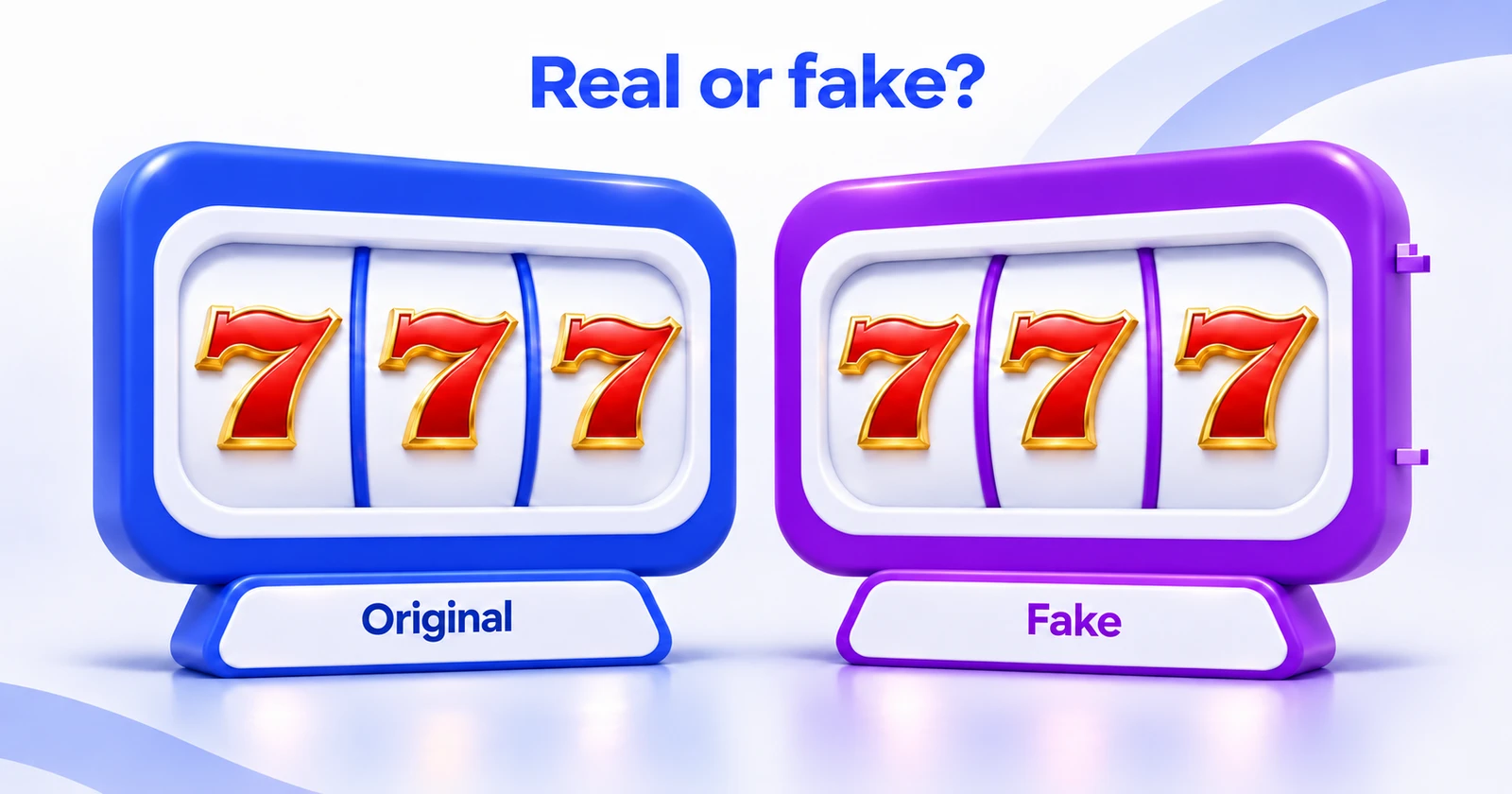


The presence of games from licensed software developers on unregulated gambling platforms has raised questions about whether these products are authentic or sophisticated copies. The issue gained renewed attention after the Coalition to End Gambling Ads (CEGA) alleged that games from 18 UK-licensed B2B suppliers were available on black-market websites.
The Betting and Gaming Council (BGC) challenged the allegations, suggesting that some of the products could be counterfeit versions using legitimate providers’ branding, artwork and game designs without authorisation.
The distinction is important because players accessing fake casino games may not receive the advertised return-to-player (RTP) percentages or the mechanics associated with genuine products.
Technology Helps Investigators Identify Fake Games
Former UK Gambling Commission executive Tim Miller, founder of GamReg Consulting, explained that identifying the origin of games on illegal platforms was historically difficult. However, technological developments are improving the ability of regulators and specialist companies to trace suppliers.
Gaming Compliance International (GCI) uses research teams and proprietary software to investigate suspicious platforms. Its analysis includes game artwork, graphics, gameplay mechanics, payment processing, affiliate marketing and odds.
GCI CEO Matthew Holt acknowledged that distinguishing every counterfeit from an authentic product remains challenging, particularly when copies closely reproduce original games. Artificial intelligence and automated analysis nevertheless allow investigators to examine large game libraries more efficiently.
A DealMeOut report published in early 2025 also highlighted the potential consequences of counterfeit products. Its findings suggested that fake games could account for a significant share of the content available on black-market platforms. Players may believe they are using regulated games with established RTP values when the actual returns are controlled by the operator.
Supplier Responsibility Remains Disputed
The debate intensified following the UKGC’s £4.75 million settlement with Evolution in July 2026. The regulator found that Evolution games had been accessible through two unlicensed operators across six websites.
Evolution maintained that it had not knowingly supplied the platforms and that third-party aggregators were involved. This raises wider questions about how much responsibility suppliers retain when their content reaches unauthorised operators through distribution partners.
Play’n GO, another provider named in CEGA’s investigation, informed major aggregator partners in October 2026 that its games would no longer be distributed through them.
CEGA continues to call for stronger enforcement against suppliers whose content appears on illegal platforms. Its director, Will Prochaska, argues:
Providers should demonstrate that they are taking legal or enforcement action against websites using unauthorised copies.
Will Prochaska, Director of the Coalition to End Gambling Ads (CEGA)
Ultimately, regulators face the challenge of establishing reliable evidence about game authenticity and identifying responsibility across increasingly complex distribution networks.






Comments
This action can't be undone.