








Getting started with casino gambling in 2026 may seem straightforward, but beginners still need a firm handle on the basics before risking real money. Many first-time players want answers to three basic questions: what is gambling, how online gambling works, and which games are easiest to approach at the start.
This guide answers those questions without padding or detours. It walks through the areas that shape a player’s first sessions, such as game types, odds, payments, bonuses, bankroll control, and safer play, so new users can avoid early mistakes and make more deliberate choices on online gambling sites.
What Is Casino Gambling?
Casino gambling blends entertainment, risk, and the chance of a win. Today, much of that experience takes place online, where slots, roulette, card games, and live formats sit side by side on one platform, each with its own pace and character.
At its simplest, gambling means putting money on outcomes shaped by chance, yet no two games play out in quite the same way. That is why it helps to approach online gambling games with a sense of how they function before getting drawn into odds, payouts, and game choice.
How Online Casinos Work

For first-timers, it helps to recognise that gambling games online are not just flashy visuals on a screen. On legitimate platforms, games run through fixed systems and defined rules, while payments and account actions follow established procedures instead of being made up as they go along.
Understanding the House Edge
A casino does not need to win every round to stay profitable. Instead, each game is designed with a built-in advantage known as the house edge, which allows the casino to retain a share of the money over time. This does not mean every session ends in a loss. Short-term results can vary, but the overall maths still favours the casino.
RNG (Random Number Generator)
Most digital casino games rely on a system called an RNG, or random number generator. It determines the result of each spin, hand, or round, rather than leaving the outcome to a person behind the screen. A run of losses does not mean a win is getting closer, and a lucky streak does not make the next round safer. Each result stands on its own, so there is no pattern to crack and no previous outcome that can tell you what happens next.
Odds vs. Payouts
In casino games, there is always a trade-off between how often something happens and how much it pays. Let’s start from the first part of the equation. What are the odds in gambling? Odds describe how likely a result is, e.g., 1 in 100. Payouts show how much a result returns when it does happen, e.g., 100 times your bet. The bigger the possible win, the less often it appears. Smaller wins land more regularly and keep the balance moving, while larger payouts can take many rounds to show.
How to Choose a Reliable Casino
Knowing how to choose a gambling site means looking beyond labels like best online gambling sites and treating any casino review as a starting point rather than proof. The real checks sit elsewhere: licensing, player protection, payment handling, and the warning signs that can point to a weaker operator.
- iGaming Licences and Regulation – A licence casino is one of the first signs that a casino is operating under recognised rules rather than making them up as it goes. It shows that the platform is expected to meet baseline standards on fair play, player protection, and complaints.
- Data Protection and Fair Play – A reliable gambling website treats personal and payment data as something that has to be protected, not just mentioned in passing. You see that in secure connections, privacy rules that say something concrete, and payment systems that do not hide behind vague legal wording.
- Payment Methods and Withdrawal Options – Payments are where a casino shows how it really operates. Deposits tend to go through quickly, but withdrawals are where delays, checks, and restrictions start to surface.
Red Flags to Avoid
A casino can look polished and still turn problematic the moment money or verification enters the picture. This is where the warning signs matter most, because weak platforms tend to reveal themselves in the small print, the payment flow, and the way they handle basic communication. Here are some of the main red flags to be aware of:
- No licence details or legal information that can be checked.
- Bonus terms that are buried, confusing, or written to be misunderstood.
- Fees, limits, or payout timing explained only vaguely.
- Withdrawal restrictions that appear late or only in the small print.
- Slow, evasive, or hard-to-reach customer support.
- Broken pages, sloppy wording, or policy text that feels careless.
- Claims that sound inflated, especially around guaranteed wins or unusually generous offers.




Getting Started: First Steps for Beginners
Before any real-money play begins, the account setup involves more than registration alone. Verification, payment details, and bonus activation all influence how the first stage of play unfolds.
Those early choices can affect deposits, withdrawals, and whether promotional terms apply the way the player expects. When that setup is handled properly from the start, there is less chance of friction once money enters the account.
(step-by-step guide)
Step 1:
Click the “Register” or “Sign Up” button on the casino’s homepage.
Step 2:
Fill out the registration form (enter your basic details) or choose a quick sign-up route via a Google account or social media.
Step 3:
Accept the terms and conditions of the platform to complete your profile creation.
Step 4:
Go to the “Bonuses” or “Promos” section to check the conditions of the welcome package and copy a promo code if one is required.
Step 5:
Navigate to the verification page (KYC) in your personal account area.
Step 6:
Upload your documents to verify your identity (passport or ID card) and proof of address (such as a utility bill), then wait for the administration’s approval.
Step 7:
Open the Cashier or Deposit page on the website.
Step 8:
Select your preferred payment method and enter the required details.
Step 9:
Enter the amount and activate the bonus (by checking the opt-in box or entering the promo code before making the payment).
Step 10:
Confirm the transaction and check your balance — the funds and the bonus will appear in your account, and all subsequent activities will start showing up in your account history.
Types of Casino Games

A casino lobby may look like one long game list, but each casino game format inside it plays differently. One keeps the action moving in seconds, another gives you more time to follow the table and settle into the round. The category you choose shapes the pace and mood of the session, which is why it helps to look beyond the surface before you play casino games for real money.
Slot Machines
Online casino slots take up the biggest share of most online casino lobbies, and they remain one of the easiest casino formats to approach. You choose a stake, hit spin, and get the result almost at once, which is a large part of their appeal. What changes from one title to another is everything built around that simple loop. Some slots stay simple, while others add stronger visuals, free spins, bonus rounds, multipliers, and layered features, giving the category real range in pace, style, and volatility.








Table Games
Table games cover the more traditional side of casino play, built around cards, wheels, and one round at a time. This is where roulette, blackjack, baccarat, and poker-style titles sit, and the pace usually feels more measured than it does in slots. You are following a table, a ruleset, and a more structured betting format rather than watching symbols land on reels. Beyond the best-known names, many casinos also offer games like Andar Bahar or Sic Bo, along with rule variations, side bets, and table settings that shape the session.
Live Dealer Games
Live dealer games place a real person at the table and stream the action as it happens. Alongside roulette, blackjack, baccarat, and poker, many live lobbies also include studio game shows and other presenter-led formats. For beginners, that setup can make online casino play feel less remote, because the pace is steadier, the table remains in view, and each step unfolds in real time rather than through automated animation.





Crash Games and Instant Wins
Crash games and instant-win titles are built around speed. The rules are light, rounds are short, and outcomes arrive almost immediately, so the category feels sharper and more restless than slower casino formats. In crash games, the tension sits in a single rising moment: the multiplier climbs, and the player must decide when to cash out before it crashes. Instant-win games, like a coin flip, strip things back further, settling bets within seconds and moving the next round into view almost straight away. That pace is a large part of their appeal.








Understanding Bonuses and Terms
A bonus can look generous and still give very little back once the terms come into play. Casino promotions are not free money to withdraw at will. Their real value depends on the wagering, game restrictions, bet limits, and expiry rules attached to the offer.
Wagering Requirements
Wagering requirements show how much betting must be completed before bonus-linked winnings can be withdrawn. This is where many offers lose appeal, because a headline figure can hide a much heavier playthrough target underneath. For example, a $100 bonus with a 40x wagering requirement does not mean $100 is ready to cash out. It means $4,000 in qualifying bets must be placed first. The same principle applies to free spins and similar extras, so a bonus is only as valuable as its terms.
Contribution Rates and Bet Limits
Game contribution is the next pressure point. Not every title helps clear a bonus in the same way: some count in full, some only partly, and some not at all. Slots often contribute fully, while table games or live titles are frequently restricted or excluded, which immediately affects how realistic the wagering target is. Bet limits can make things tighter by capping the maximum stake allowed per spin or round while the offer is active.
Bankroll Management
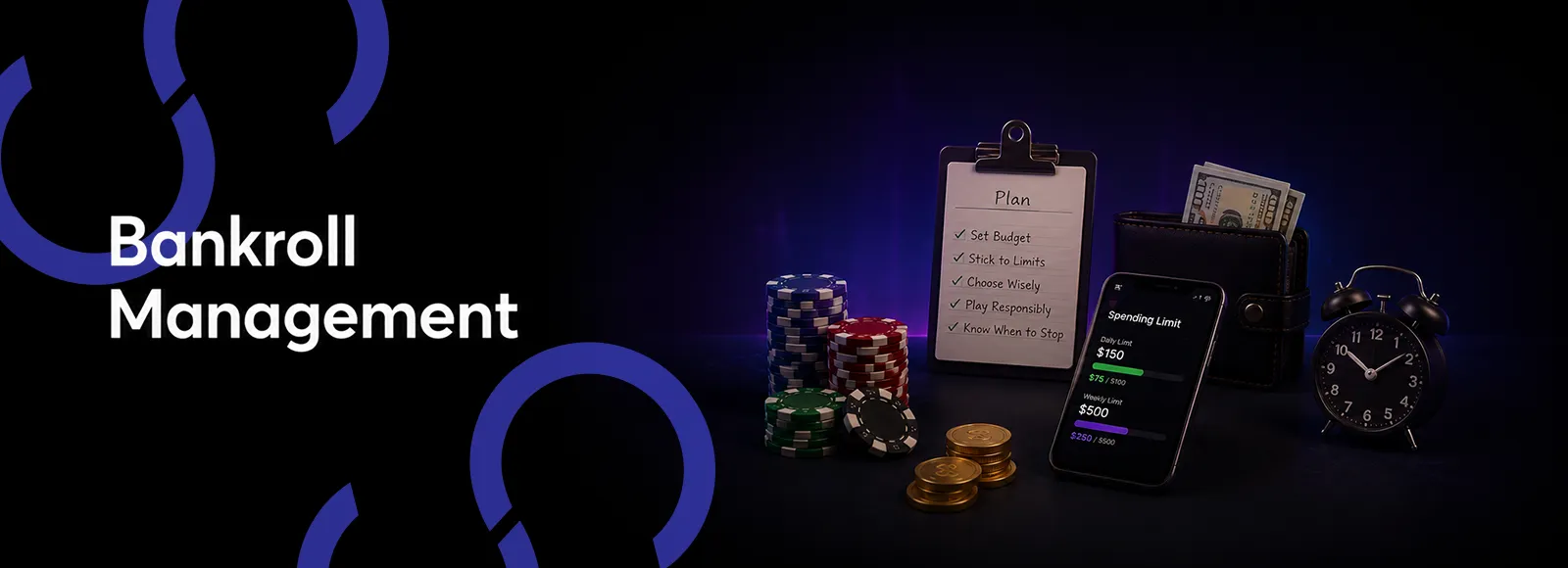
A bankroll is the money set aside for play and kept separate from everyday spending. It sets a boundary before the session begins, so losses do not start reaching into money meant for something else. The aim is not to force a win, but to decide the limit before the first bet is placed. Once it is crossed, the session is over.
Setting Daily and Weekly Limits
Daily and weekly limits set the endpoint in advance. The figure is chosen before the session begins, not rewritten halfway through it.
Without that cap, the stop point starts to slide. A session runs longer than planned, the balance thins out, and another deposit begins to look like a minor adjustment instead of a fresh decision. A preset limit cuts that pattern short. Spending stays contained, and the finish line does not move.
Choosing Games Based on Risk Level
Not all games put the same strain on a bankroll. Some move at a steadier pace and stretch play out, while others swing sharply and can reshape the balance in a handful of rounds.
Lower-volatility games tend to keep the session steadier and the swings narrower. Higher-volatility titles chase a different pattern: bigger peaks, longer dry spells, and more pressure on the balance. That choice affects not just the pace of play, but how much variance the bankroll has to carry.
Importance of Demo Mode
Demo mode lets a game show what it is really like before money is involved. It reveals the pace, the feature load, and the way a session unfolds once the surface gloss drops away.
That matters most with feature-heavy slots and newer formats, where presentation can give the wrong impression. Many platforms offer free gambling games across different categories, giving players room to test a title before deciding whether it deserves a place in a real-money session.
Responsible Gambling
Responsible gambling begins with seeing casino play for what it is: paid entertainment, not income and not a way out of financial pressure. A reliable casino supports that boundary with clear limits, built-in safeguards, and accessible help, while the player’s side of the equation is to keep time, spending, and expectation under control.
| Organization | Coverage Area | |
|---|---|---|
| Gambling Therapy | Global (Multilingual support available) | [email protected] |
| GamCare | UK / International | [email protected] [email protected] |
| BeGambleAware | UK / Europe | [email protected] |
| Gordon Moody | UK / International | [email protected] |
| NCPG (National Council on Problem Gambling) | USA / Canada | [email protected] |
Tools for Staying in Control
Control should not rest on willpower alone. A well-run casino builds it into the platform, so the limits hold even when the session picks up pace.
- Deposit limits cap how much can be added over a set period.
- Loss limits set a ceiling on how much can be spent.
- Session reminders track how long the session has been running.
- Reality checks interrupt the session with a clear update on time and spending.
- Cooling-off periods lock access for a short reset.
- Self-exclusion blocks the account for a longer, enforced break.
These are working controls, not background settings. Switched on early, they keep the session defined and remove the need to negotiate with yourself once pressure builds.
Mobile Experience

Mobile access is now essential for any serious online casino, but the real difference shows in how well the platform performs during play. Whether accessed through an app or a mobile browser, it should feel smooth, stable, and easy to use. Players should be able to handle the main parts of the experience without friction, from registration and account settings to payments and bonuses. The best gambling apps and properly optimised sites should also ensure that games run cleanly and key features stay easy to reach.
Summary
Getting started in online casino gambling is less about rushing into a session and more about reading the environment properly before any money is at stake. A stronger start comes from understanding how games work, how casino bonuses are framed, how cashouts are handled, and which details separate credible platforms from weaker gambling websites.
The aim is not to remove risk, but to see it clearly before it starts shaping decisions for you. Choose carefully, keep the money side contained, and never gamble as if the session were a shortcut to income.
FAQs
What Is The Easiest Game For A Beginner To Win?
No casino game offers an easy win on demand. A better starting point is a format with clear rules, low stakes, and a pace that feels easy to follow.
Can I Win Real Money At Online Casinos?
Yes. Gambling real money online can lead to actual winnings, but the result still depends on the game, stake size, and luck.
Is It Safe To Verify Your Identity At Online Casinos?
Yes, provided the site is properly run. Identity checks are a standard part of payout security, and a serious platform explains the process clearly instead of springing it on the player late.
What Is The Minimum Deposit To Start Playing Casino Games?
That depends on the site and the payment method. The safest place to check is the cashier, where the deposit minimum, limits, and accepted options should be laid out in plain view.
Can I Play Casino Games On Mobile?
Yes, provided the casino is properly optimised. A strong mobile setup should give full access to games, payments, bonuses, and account settings without feeling limited.
How Long Does It Take To Withdraw My Winnings?
A withdrawal nearly always takes longer than a deposit. The final timing depends on verification, the platform’s review process, and the payment route itself.