





Poker positions are one of the most important and most misunderstood fundamentals in online poker. Where you sit at the table determines how much information you have, which hands you should play, and how aggressive or cautious your strategy needs to be. You will learn how table layout works, why acting in position (IP) gives you a major edge, and how being out of position (OOP) forces different strategic choices. Whether you play cash games or tournaments, live or online, understanding poker table positions will immediately improve your win rate and help you avoid costly mistakes from every seat at the table.
Why Position Is Everything (IP vs. OOP)
In poker, position influences virtually every decision you make, from starting hand selection to bluffing and value betting. Actions later in the hand give you access to more information, while actions early in the hand force you to spend chips without knowing what your opponents will do.
In Position (IP)
Being in position means you act after your opponents on postflop streets. This is one of the biggest advantages in poker. Acting last allows you to see how others behave before you make a decision, giving you more accurate information about their hand strength. You can control the pot more easily by checking behind with marginal hands or betting when opponents show weakness. In position, bluffing becomes more effective because you can apply pressure at the right moments, especially when opponents check to you.
You also realize more equity from your hands since you are less likely to be forced into tough decisions. Strong players widen their ranges in position because mistakes are cheaper and opportunities are greater. Over time, consistently playing more hands in position leads to higher win rates and better overall control of the game.
Out of Position (OOP)
Playing out of position means you must act first on most postflop streets, which puts you at a clear disadvantage. You are forced to make decisions without knowing how your opponents will respond, increasing the risk of being exploited. Betting OOP can lead to getting raised off equity, while checking often gives opponents the chance to take control of the hand. Because of this, OOP play requires tighter ranges and more discipline.
Marginal hands lose value, and mistakes become more expensive. You must rely on solid fundamentals like range construction, selective aggression, and well-timed checks to avoid bleeding chips. While skilled players can still win from OOP, it is much harder to do so consistently. Understanding when to defend, fold, or slow down is critical to surviving and minimizing losses from early positions.
The Advantage
The true advantage of a position lies in information and control. Acting later lets you gather data from your opponents’ actions and adjust your strategy accordingly. This reduces guesswork and increases precision in betting, calling, or folding. Position also allows you to apply pressure with less risk, forcing opponents into difficult decisions when they are unsure where they stand. Over thousands of hands, these small edges compound into significant profit.
Players who prioritize position naturally avoid marginal spots and capitalize on favorable ones. This is why strong players build their strategy around positional awareness rather than just hand strength. When you consistently seek positional advantage, you play fewer losing hands and extract more value from winning ones. In poker, position is not just an edge. It is the foundation of long-term success.




The Table Map: Poker Seat Names (Detailed Breakdown)
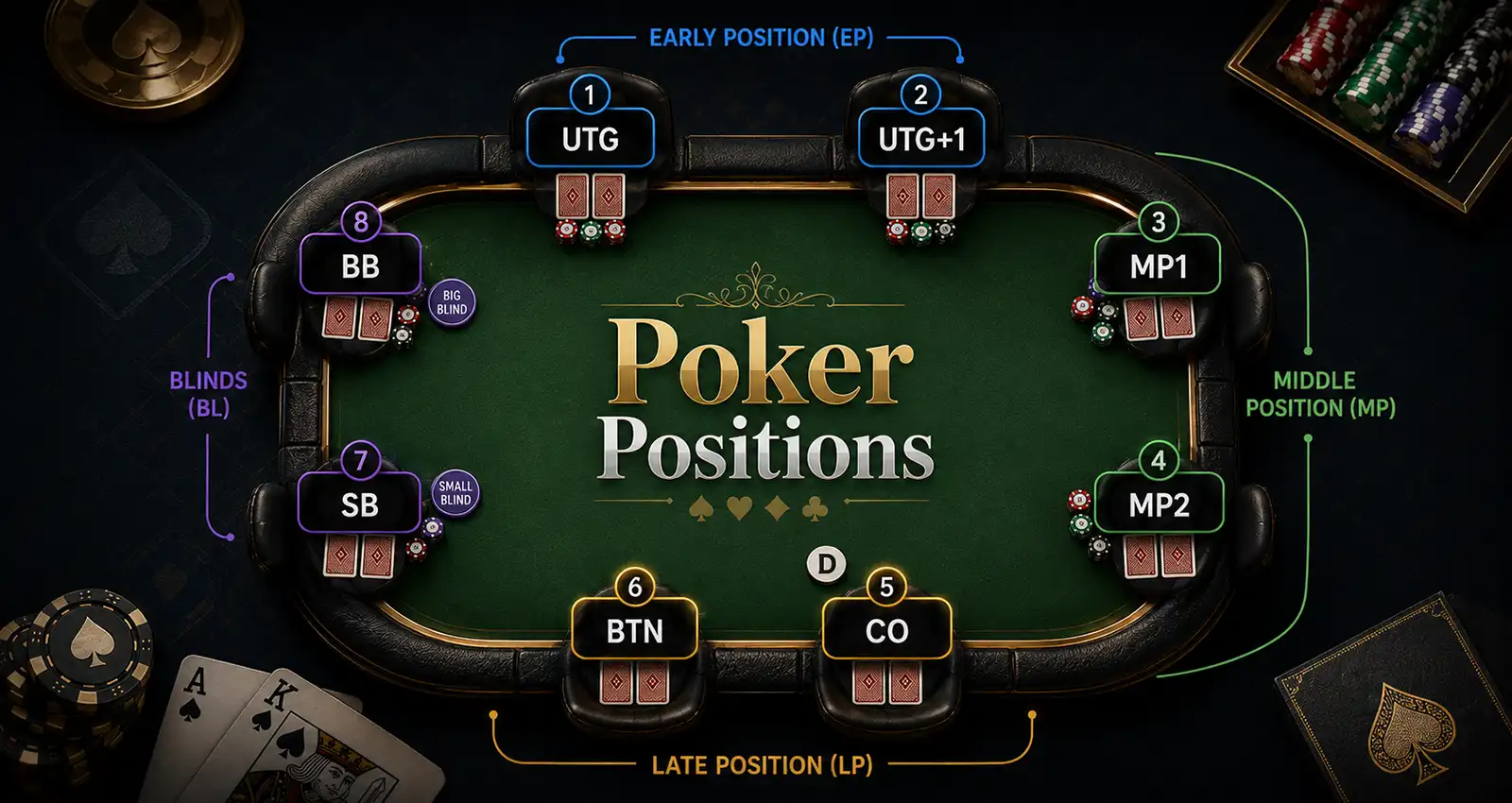
Every poker table follows a structured layout, and each seat comes with its own strategic responsibilities, often referred to as poker positions names. These seats are grouped into early, middle, and late positions, with the blinds forming a special category of their own. Understanding table positions in poker and how the table map works helps you choose better starting hands, avoid tough situations, and take advantage of opponents who misplay position. As the dealer button moves each hand, your role changes, and so should your strategy. This breakdown explains each positional group in detail so you know what is expected from every seat and how to adjust your play for maximum profitability.
Early Position (EP)
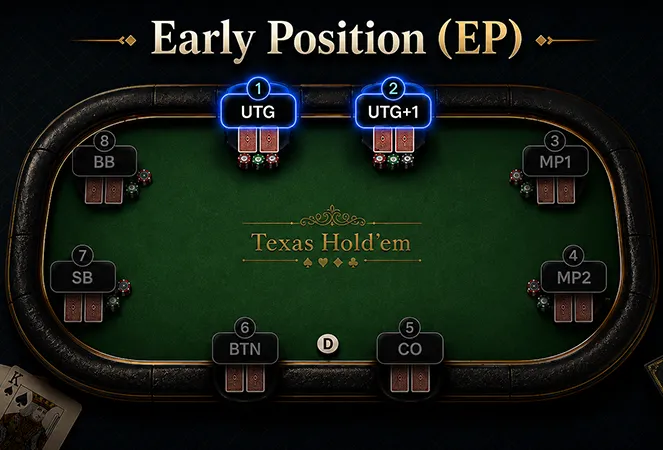
Early position refers to the seats that act first before the flop, typically Under the Gun (UTG) and sometimes UTG+1 at full tables. These are the most difficult positions to play because you must act with no information about what other players will do behind you. As a result, early position demands the tightest and most disciplined starting hand selection. Strong, well-connected hands and premium pairs gain value here, while speculative and marginal holdings should usually be folded.
Playing too many hands from early position leads to frequent tough decisions and costly mistakes after the flop. When you do enter a pot from EP, your range is naturally perceived as strong, which can help you get more respect on later streets. Solid early position play is about patience, control, and minimizing risk.
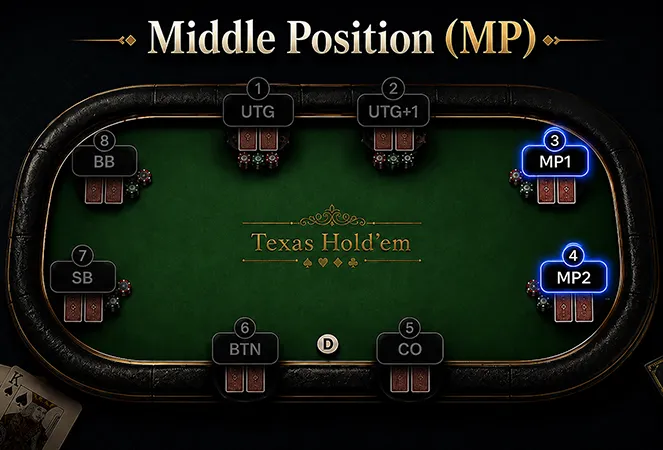
Middle Position (MP)
The middle position sits between the early and late positions and offers a balance of opportunity and caution. In MP, you have fewer players left to act behind you, which allows for a slightly wider opening range compared to the early position. However, you still must respect the presence of late position players who can apply pressure with their position. Hands like suited connectors, broadway cards, and medium pairs become more playable here, especially in games with passive opponents. The middle position is also where adaptability becomes important.
You should pay close attention to the tendencies of players behind you and adjust your aggression accordingly. Overplaying hands in MP can still lead to difficult spots, but disciplined expansion of your range can significantly increase your profit. Strong middle position play bridges tight early strategy and aggressive late position pressure.
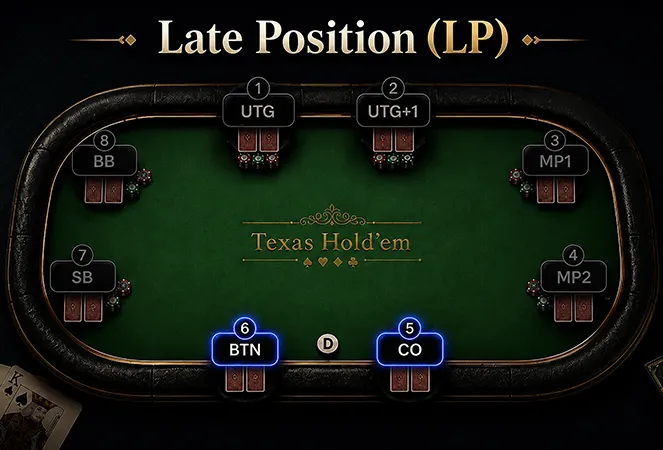
Late Position (LP) – The “Money Seats”
Late position includes the Cutoff and the Button, and these are often called the money seats for a reason. Acting last on most postflop streets gives you maximum information and control over the hand. From late position, you can open a wide range of hands, steal blinds more frequently, and exploit weaker players with pressure and well-timed aggression. Marginal hands gain value because position allows you to realize equity more efficiently.
Late position is also where bluffing and floating become powerful tools, as you can react to opponents’ actions rather than guessing. Skilled players build much of their win rate from these seats by constantly applying pressure and forcing mistakes. Learning to fully exploit late position is one of the fastest ways to improve your results.
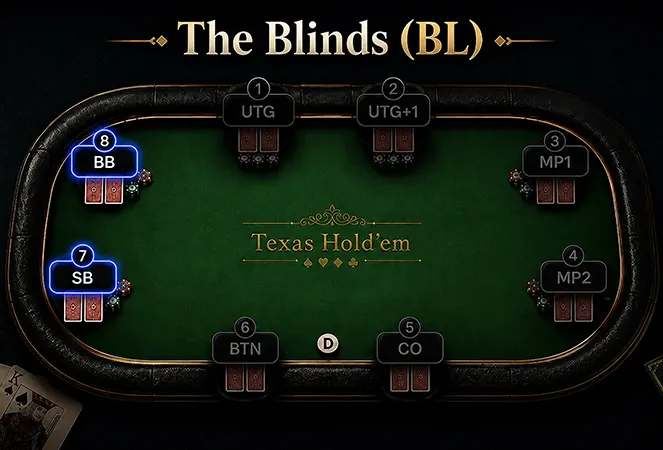
The Blinds (Special Category)
The small blind and big blind are unique positions because you are forced to post chips before seeing your cards. The blinds do not both act last pre-flop (the big blind acts last, while the small blind does not), and in heads-up play only the small blind/button is in position post-flop, while the big blind remains out of position. This makes blind play particularly challenging. Defending too loosely can lead to long-term losses, while folding too often allows opponents to steal your chips uncontested.
A successful blind strategy requires a careful balance of defense, aggression, and awareness of opponent tendencies. You must understand when to call, raise, or fold based on position, stack sizes, and opening ranges. Because you are already invested, mistakes in the blinds are expensive. Mastering blind play is essential for protecting your win rate.
Pre-Flop vs. Post-Flop Order (Crucial Logic)
One of the most important concepts in poker is understanding how the betting order changes from pre-flop to post-flop. Before the flop, action starts with the player to the left of the big blind and moves clockwise around the table. This means early position players act first, while late position players get to see more action before making a decision.
After the flop, however, the order shifts. Post-flop action starts with the player to the left of the button; that player acts first, while the button acts last. This reversal is what makes late position, especially the Button, so powerful. Acting last allows you to gather information, control pot size, and apply pressure with greater accuracy. Many mistakes come from ignoring this shift in order and treating pre-flop and post-flop decisions the same way.
6-Max vs. 9-Max (Full Ring) Differences
The difference between 6-max and 9-max poker dramatically affects position, hand selection, and overall strategy.
In 6 max games, there are fewer players at the table, which means blinds come around more often and ranges must be wider. Positions like Under the Gun act more like a middle position in a full ring, allowing players to open more hands and apply aggression more frequently. The game is faster, more confrontational, and rewards active play.
In 9 max or full ring games, positions are more clearly defined, and early position is much tighter. With more players behind you, premium hands gain value, and patience becomes more important. Full ring poker tends to be slower and more methodical, while 6 max favors adaptability and pressure. Understanding these structural differences helps you adjust correctly and avoid playing too tight or too loose in the wrong format.
Relative vs. Absolute Position
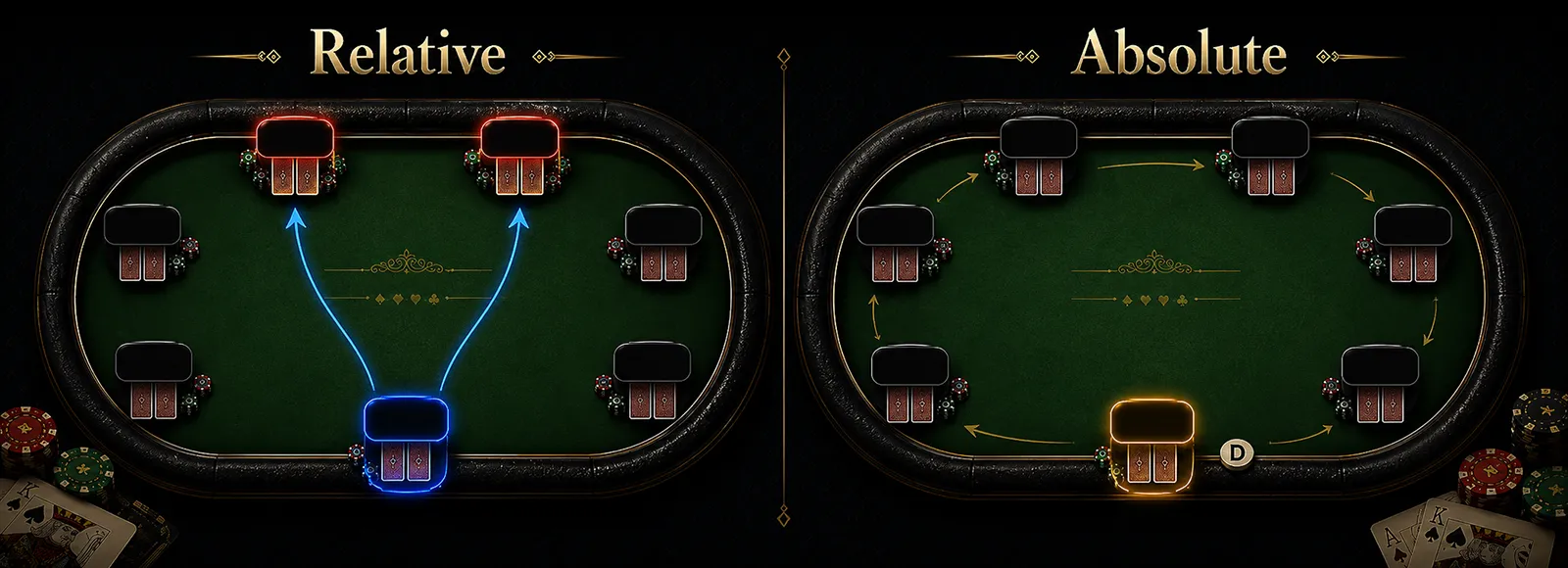
Absolute position refers to your fixed seat at the table, such as being on the Button, Cutoff, or in the blinds. It tells you where you act in the overall betting order. Relative position, on the other hand, is about where you sit in relation to specific opponents in a hand. Even if you are not in a late absolute position, having a position on a particular player can still be a major advantage.
For example, acting after a loose or aggressive opponent allows you to control the flow of the hand against them. Relative position becomes especially important in multiway pots, where different players act at different times. Strong players think beyond labels like early or late position and focus on who they will act after on each street. Mastering both concepts helps you exploit individual opponents more effectively and make better decisions in complex situations.
How Position Affects Your Starting Hands
Position plays a major role in deciding which starting hands you should play and which you should fold, making a clear understanding of poker positions a core concept for long-term success. In an early position, you are forced to act first after the flop, so your range should be tight and weighted toward strong, reliable hands. Premium pairs, strong aces, and high quality broadway cards perform best here. As you move into middle position, part of understanding positions in poker is knowing when you can widen your range slightly by adding suited connectors, suited aces, and medium pairs.
Late position allows the widest selection of starting hands because poker seating positions closer to the Button give you more information from players acting before you. Marginal hands become profitable when you can control the pot and apply pressure. Hands that rely on post-flop playability gain value with position. Players who ignore positional hand selection often find themselves in difficult spots. Adjusting your starting hands based on position is one of the simplest ways to improve your long-term results.
Common Mistakes
Many poker players understand the names of the positions but still lose money because they misuse them. Position is only powerful when it is applied correctly, and small misunderstandings can quietly drain your win rate over time. Recognizing and correcting common positional mistakes is one of the fastest ways to tighten your strategy and gain an edge over less disciplined opponents.
- Playing too many hands from early position
- Ignoring position when choosing starting hands
- Overvaluing marginal hands while out of position
- Failing to steal blinds from late position
- Calling too often from the small blind
- Not adjusting ranges for 6 max vs full ring games
- Treating absolute position as more important than relative position
- Betting automatically without considering who acts after you
Conclusion
Poker position is not just a concept to memorize. It is a skill that must be applied hand after hand to see real results. Understanding where you sit at the table, how the action flows, and how position changes from pre-flop to post-flop gives you a lasting edge over opponents who play on autopilot. From tight early position discipline to aggressive late position pressure, every seat demands a different approach. When you respect position, your starting hands improve, your decisions become clearer, and costly mistakes happen less often.
Modern poker rewards players who think ahead, value information, and exploit positional advantages whenever possible. Whether you play cash games or tournaments, live or online, mastering poker seat positions will immediately strengthen your strategy.
FAQs
What Is The Best Position In Poker?
The best position in poker is the Button. The Button acts last on every post-flop betting round, which provides the most information and control. This positional advantage allows players to play more hands, bluff more effectively, and extract maximum value while avoiding costly mistakes.
What Does UTG Mean?
UTG stands for Under the Gun. It is the position directly to the left of the big blind and the first player to act pre-flop. Because UTG must act with no information, it requires the tightest and most disciplined starting hand selection.
Why Is The Small Blind The Worst Position?
The small blind is often considered the worst position because you are forced to post chips and then act out of position for the rest of the hand. This combination leads to difficult decisions and makes mistakes more expensive over time.
What Is The Cutoff?
The Cutoff is the seat directly to the right of the dealer’s button. It is one of the strongest late positions because it acts second to last post flop, allowing players to steal blinds and apply pressure with a wide range of hands.