








Understanding how to play Keno online begins with recognising its historical roots. Over two thousand years ago, in Ancient China, a game resembling modern Keno funded state projects like the Great Wall. Chinese immigrants brought the concept to the United States in the nineteenth century. It adapted to modern casino standards, becoming the popular casino game we know today. The core Keno rules require players to select numbers from a pool of eighty possible options. Usually, players pick between one and fifteen numbers, though some versions allow up to twenty.
This Keno guide focuses on the mathematics behind the game rather than vague claims about how to win Keno consistently. You will see how probabilities, house edge, paytables, and return-to-player figures shape every bet, why the 4-to-8 spot range offers the best balance between hit frequency and payout potential, and why bankroll control matters more than systems like hot numbers or Martingale.
The Mathematics of Winning Keno
Understanding online Keno rules requires looking at basic probability rather than complex equations. The mathematical model of Keno relies on combinations without replacement. Twenty unique winning numbers are drawn randomly from the pool of eighty. To find the odds of a simple two-spot ticket, you calculate the chance of getting zero matches. The probability of complete failure on a two-spot ticket is approximately 56%. Matching exactly one number happens about 38% of the time. Both winning numbers will appear among the twenty drawn ones just over 6% of the time. Depending on the Keno rules and payouts table, such a ticket can have an RTP of 90% or even higher. Keep in mind that the number of spots you choose has an effect on RTP and volatility.
House Edge Deep Dive
The house edge represents the casino’s long-run expected profit margin. Casinos pay out at artificially lower odds compared to the true mathematical odds. Notably, Keno has one of the highest house-edge percentages among popular legal casino games. For more details, refer to the table below:
| Casino Game | Typical House Edge | Required Skill Level | Edge Mechanics |
|---|---|---|---|
| Live Keno | 10.0% to 30.0% | Zero | Lower payouts for partial matches |
| Video Keno | 5.0% to 16.0% | Zero | Better odds compensate for the fast game speed |
| Standard Slots | 3.0% to 20.0% | Zero | Algorithmic RTP |
| American Roulette | 5.26% | Zero | Two zero pockets |
| European Roulette | 2.70% | Zero | One zero pocket |
| Baccarat Banker | 1.06% | Basic | 5% commission on winning bets |
| Blackjack | Under 0.5% | High | Dealer acts last |
You might wonder why players gamble on a game with a house edge of up to 30%. The thing is, live Keno features an extremely slow pace. A standard lounge runs only about thirty draws per hour. At that speed, a player betting $1 per round would theoretically lose about $3 to $9 an hour, depending on the paytable and the house edge. That means even with a relatively modest bankroll, you can usually stretch a session longer than in faster casino games while still having a shot at a meaningful win.
The Probability of Matches
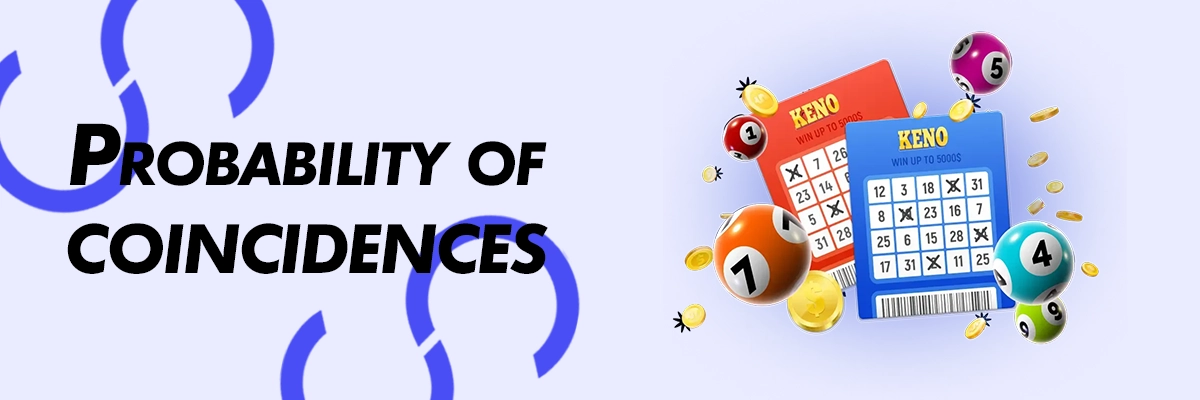
Every single ball on the Keno board has an equal 25 percent chance of being drawn in a given round. The system has no memory and each draw is an entirely independent event.
Many Keno games advertise massive jackpots for hitting a twenty-spot straight ticket. The maths puts the chance of catching all twenty numbers at once at 1 in 3,535,316,142,212,174,320. Catching fifteen out of fifteen is a 1 in 428 billion occurrence. When you pick 10 spots, the chances, according to the standard Keno table rules, are as follows:
| Exact Matches out of 10 | Probability | Odds (1 chance in…) |
|---|---|---|
| 0 matches | 0.045791 | 21.8 |
| 1 match | 0.179571 | 5.5 |
| 2 matches | 0.295257 | 3.3 |
| 3 matches | 0.267402 | 3.7 |
| 4 matches | 0.147319 | 6.7 |
| 5 matches | 0.051428 | 19.4 |
| 6 matches | 0.011479 | 87.1 |
| 7 matches | 0.001611 | 620.7 |
| 8 matches | 0.000135 | 7,384 |
| 9 matches | 0.000006 | 163,381 |
| 10 matches | 0.0000001 | 8,911,711 |
Hitting exactly two or three numbers is the most likely outcome at over 56%, but many paytables for a ten-spot ticket offer no payout for those results. Payouts typically begin at five caught numbers, which has a probability of less than six percent.




Sweet Spot Strategy
The sweet spot strategy is best understood as a practical, maths-based way to choose how many numbers to play. Players must balance hit frequency, payout size, and overall expected value. On many common paytables, the middle range offers the best balance, although the exact sweet spot still depends on the game version and payout structure.
Picking 1-3 Numbers
Playing 1 to 3 numbers keeps Keno variance low. A 1-pick ticket hits 25% of the time. A 2-pick ticket lands both numbers about 6% of the time, while a 3-pick ticket catches all three only about 1.4% of the time. You will see frequent small hits, but the trade-off is limited payout potential and modest long-term value unless the paytable is unusually strong.
Golden Range
The golden range in Keno is four to eight numbers, with five, six, and seven spots widely seen as the sweet spot. This range offers the best balance between manageable risk, regular partial returns, and the possibility of a worthwhile jackpot. In some video Keno games, six spots deliver the highest theoretical RTP, with certain optimised versions reaching up to 94.99%. Tickets in the six-to-eight spot range can help preserve your bankroll through more frequent smaller hits, while still giving you a realistic shot at a bigger win. The odds of catching all six numbers on a six-spot ticket are 1 in 7,753, while hitting all seven on a seven-spot ticket drops to 1 in 40,980.
High-Risk & High-Reward
Playing nine or more numbers is extremely risky. Jackpots for ten caught numbers can reach thousands of times your bet, but the odds remain about 1 in 8.9 million. Variance here is massive. New players should expect to suffer prolonged losing streaks because partial match payouts barely cover the initial wager.
Popular Keno Betting Systems
Players constantly test betting systems in the hope of beating the house edge. Unfortunately, mathematics shows that no system can change the underlying probabilities in a game of independent random results. That said, betting systems can still add structure, variety, or entertainment to a session, provided players understand that they do not create a genuine statistical advantage.
Hot and Cold Numbers
Hot and cold number tracking is one of the most popular approaches in Keno. Some players enjoy following recent results and adjusting their selections based on which numbers appear to be running “hot” or “cold.” In practice, however, this does not affect the outcome. Each draw is independent, and every number has the same chance of appearing regardless of previous results. Short-term clusters can make patterns feel meaningful, but on certified random number generators there is no mathematical basis for expecting past frequency to influence future draws.
The Martingale System in Keno
The Martingale system involves doubling your stake after losses in an attempt to recover previous bets with a small profit. While this approach can appeal to players who want a more structured betting pattern, it fits poorly with Keno casino rules. The game does not follow the simple even-money logic that Martingale was designed for, and losing streaks can escalate the required stake very quickly. For example, ten consecutive losing rounds from a $1 starting bet would require a $1,024 wager on the next round just to recover earlier losses and earn a $1 profit. Table limits set by Keno game rules and bankroll constraints usually make this system unsustainable in practice.
Pattern Betting
Pattern betting is another common habit among Keno players. Some prefer to mark numbers in shapes such as lines, corners, squares, or crosses because it makes the board feel more organised or visually intuitive. While this can make the game more engaging, it has no impact on the mathematics of the draw. The position of a number on the board does not affect its probability of being selected, and random number generators do not recognise visual patterns. Any apparent success from a particular layout is the result of short-term variance rather than a repeatable edge.
Managing Your Bankroll
Bankroll management cannot change the odds in Keno, but it can make the game more sustainable and easier to control. Because Keno is a high-variance game, the goal is not to beat the maths, but to manage how quickly your bankroll is exposed to it. A simple flat-betting approach is usually the most practical option, with many players choosing to risk around one to two percent of their total bankroll per round. This helps limit sharp swings and reduces the chance of chasing losses after an unlucky stretch.
Session Limits
Responsible gambling requires setting strict session limits, which is one of the most effective ways to keep Keno enjoyable and controlled. A stop-loss sets a clear maximum amount you are willing to lose before ending the session. Time limits can also help by preventing fatigue, frustration, and impulsive decisions during long play sessions. Some players also set a win goal, such as cashing out after a 30% or 50% gain, to avoid giving back short-term profits. These limits do not improve expected value, but they do create structure and make it easier to play within your means.
Multi-Card Keno Ticket
A multi-card Keno ticket lets you play several boards at once using the same draw. This increases action and gives you more combinations in play, but it does not improve the underlying odds on any individual card. Instead, it changes variance by spreading your stake across multiple selections. Some players use multi-card tickets to test different spot counts or number patterns in a single session. They can make Keno more engaging, but careful bankroll control is essential because total spending rises much faster.
How to Choose the Best Keno Game for Winning
Not all Keno games offer the same value. Two online variants may look nearly identical, yet their paytables, RTP, pace of play, and jackpot structure can produce very different results over time. Choosing the right version will not remove the house edge, but it can reduce unnecessary losses and give you a better overall playing experience.
Comparing Paytables
The paytable is one of the most important things to check alongside the rules of Keno. It determines how much the game returns for specific hit combinations, and even small differences can have a major effect on long-term value. While many players focus only on the top jackpot, smaller and mid-tier payouts often matter more in practice. A game that returns something for lower hit totals, or offers stronger payouts in the middle of the paytable, may provide a better balance of volatility and value than one built entirely around a headline prize.
RTP in Video Keno vs. Live Keno
Video Keno generally offers a higher RTP than live Keno, which makes it the better mathematical option on paper. Live Keno often carries a much larger house edge because of slower ticket sales, staffing costs, and more conservative payout structures. However, pace also matters. A live Keno session moves slowly, which can limit your hourly losses even with worse odds. Video Keno may offer stronger returns in percentage terms, but its faster speed can increase your total exposure unless you deliberately slow your play.
Progressive Jackpot Strategy
Progressive jackpot Keno is the one format that can become very attractive as the prize pool grows. A portion of every wager feeds the jackpot, and in rare cases the top prize can climb high enough to improve the game’s expected value. That does not mean every progressive is worth chasing. Most remain unprofitable for long periods, and the required hit combinations are still extremely unlikely. For most players, playing progressive Keno is best treated as just a way to test your luck, without expecting a better long-term value.
Expert Tips for Online Keno Players
Getting the most out of Keno comes down to understanding the odds, the payouts, and how different variations of the game work. With those basics in mind, you can follow a clear set of practical guidelines:
- Master the core mechanics. You must understand the exact interface and rules before risking capital. Figuring out how to play Keno during your first active session inevitably leads to costly mistakes and poor bankroll decisions.
- Choose a reputable casino. Read a detailed casino review to check whether the platform holds a proper licence and has a strong record of processing deposits and withdrawals promptly. A fair welcome bonus is also something worth looking for, as it increases your starting capital and provides a financial buffer against the house edge.
- Find high RTP variations. Choose specific game variants like Caveman Keno or Cleopatra Keno that openly declare RTP above 90%.
- Follow the golden range. Target 5, 6, or 7 numbers exclusively to balance frequency and payout.
- Control your speed. Digital Keno has very quick rounds, so make sure to pause between rounds to cut hourly losses.
- Hunt only progressive jackpots that are worth it. Learn how to calculate the true value of the progressive jackpot if you plan to hunt for one.
Conclusion
Keno is a game governed by strict probabilities and independent random draws. No superstition, pattern, or betting system can remove the house edge. The strongest practical approach is to focus on the factors you can control: choosing favourable paytables, targeting higher RTP games, managing your bankroll carefully, and sticking to spot ranges that balance risk and reward. For most players, that means treating Keno as entertainment first. Only unusually large progressive jackpots have the potential to shift the maths in the player’s favour.
FAQs
Is Online Keno Rigged?
Licensed online casinos use certified random number generators to produce Keno results. Reputable operators are regularly tested by independent auditors such as iTech Labs, eCOGRA, and GLI to confirm that outcomes are fair and random. For regulated casinos, rigging games would create serious legal and reputational risks, so it makes little business sense.
What Are the Best Numbers to Pick in Keno?
There are no “best” numbers in Keno from a mathematical point of view. Every number has the same 25% chance of being drawn in any given game. Because each round is independent, past results do not influence future ones, which makes hot and cold number tracking unreliable.
Do Casino Promotions Increase Your Keno RTP?
Promotions can improve the overall value of your play, but they do not change the underlying odds of the game itself. Multi-race discounts, bonus funds, and special offers can reduce your effective cost per round or extend your bankroll, which slightly improves your practical return. Some video Keno titles also include built-in features or multipliers that raise their theoretical RTP. As always, the details matter, so it is important to read the terms carefully before assuming an offer adds value.
Which Keno Game Has the Best RTP?
In general, video Keno offers a much higher RTP than live Keno. While many standard online versions sit around the 90% mark, some premium titles can reach the mid-90s or higher depending on the paytable and the number of spots selected. The best option is not always the one with the biggest advertised jackpot, but the one with the strongest overall paytable for your preferred ticket size.
Is There Software to Predict Keno Numbers?
No software can predict Keno results. In regulated games, each draw is generated randomly, so past outcomes cannot be used to forecast future ones. Any service claiming to predict winning Keno numbers should be treated as a scam.
Should I Always Use the Quick Pick Feature?
Quick Pick gives you the same mathematical odds as choosing the numbers yourself. A random selection has exactly the same probability as any manually chosen combination. The main advantage of Quick Pick is convenience, and some players also prefer it because it removes emotional bias from number selection.